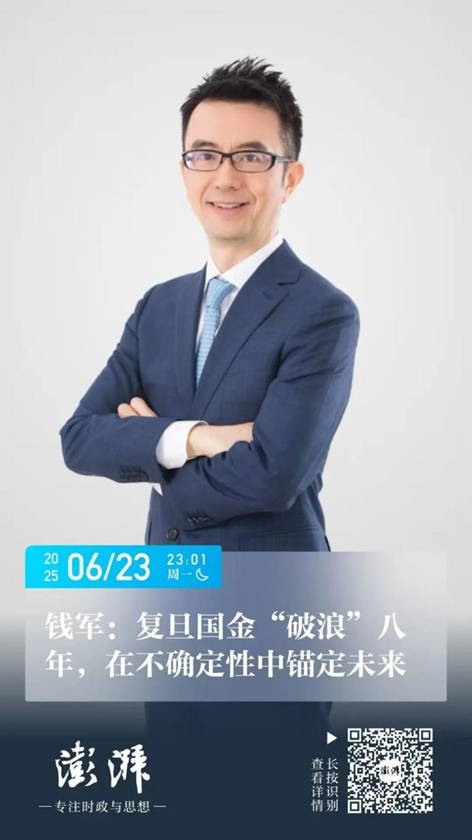
Professor Jun Qian Accepts an Exclusive Interview of ThePaper.cn: “Having “Ridden Waves” for Eight Years, FISF will Anchor the Future of Uncertainties | Info
Release time:2025-06-25
Professor Jun Qian Accepts an Exclusive Interview of ThePaper.cn: “Having “Ridden Waves” for Eight Years, FISF will Anchor the Future of Uncertainties | Info
On June 23rd, Fudan International School of Finance welcomed its 8th anniversary. For an institution committed to building a world-class financial school, eight years is not only a milestone starting to show its sharpness, but also a new starting point going towards the future.
At this time, Jun Qian, Executive Dean of FISF and Professor in Finance, accepted an exclusive interview of ThePaper.cn in the teaching building newly launched by the school. He focused his talk on core topics of how to evaluate the school’s “highlight moments” and “key breakthroughs” in the past eight years; what core competitiveness FISF is holding at the time when competition in financial education is so fierce both at home and abroad; and how this young school shall “ride winds and waves to forge ahead” in face of the dramatic changes in the global political and economic landscape and the sweeping wave of technology.
Below are the original contents of the interview:
01
Internationalization is not just a slogan, but a practice
“We have a clear positioning: an internationalized business school focused on finance.” Jun Qian came straight to the point. The “internationalized” here is not just a slogan, but the DNA throughout the full process of the school construction. Looking back on the eight years, one of the key breakthroughs is building an internationalized, professional teaching team of nearly 60 people, including 25 full-time professors who were mostly recruited from the fierce competition of the global market and equipped with a doctor’s degree in economics or finance at world-leading colleges and universities. Many of the senior professors were determined to return to China even after obtaining a tenured position at first-class business schools abroad. “Many of our professors mainly study China’s economic and financial issues, but we are telling good Chinese stories on international first-class academic platforms.”
The mark of internationalization also displays in the teaching programs. From the first innovative program “Elite Masters of Finance” (EMF) launched in September 2018, which allowed some students to accept graduate education at their senior year, to the official establishment of the three programs of EMF, MBA PT+ and FEMBA PT+ that enrolled the first batch of students in 2019, to the first-time enrollment of undergraduates in September 2023, FISF has gradually constructed its “full-link” academic program system.
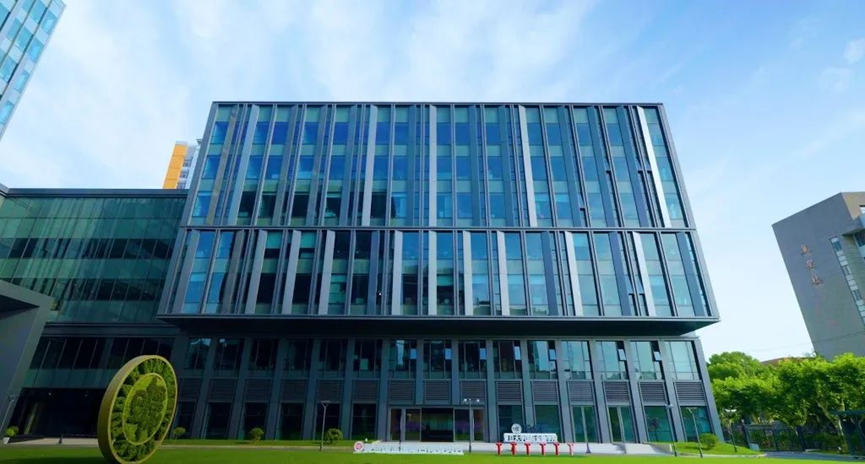
The teaching building newly launched by Fudan International School of Finance
Jun Qian was quite proud of this, “Currently we have three full-time programs, namely Global Bachelor of Fintech (GBF), Elite Masters of Finance (EMF) and MBA FT+, all of which adopt full English teaching. I believe we are the only school among all the business schools in Mainland China that can do this.” Such a thoroughly internationalized teaching environment attracted attention worldwide. Among the first batch of students for the bachelor’s program, about 30% came from Hong Kong, Macao, Taiwan and abroad, and the proportion rose to nearly 40% last year. This year, it is estimated that over 20 international students (not including Hong Kong, Macao and Taiwan) will be enrolled, bringing the proportion of non-Mainland students up to nearly 50%. “This is a beneficial cycle”, said Qian, “If you actually practiced the internationalization as you previously said, you’ll naturally attract teachers and students who approve of this idea.”
To further deepen the internationalization strategy, the school has also actively expanded its cooperation network with world-class universities. So far it has signed dual-degree cooperation agreements with Columbia Engineering and University of Wisconsin–Madison in the US, Imperial College Business School in UK and NUS Business School in Singapore, covering frontier fields of financial engineering, data analysis, climate change finance, wealth management, real estate finance. “We encourage students, especially Chinese students who have never studied abroad systematically, to see how foreign financial markets operate and how green finance, wealth management and technology transfer are practiced in various cultures and systems.” This strategy combining “going out” and “bringing in” is aimed to nurture students’ true global perspective.
02
Embracing sci-tech innovation, being “the partner of scientists”
If we say “internationalization” means the naturally born background color of FISF, then “embracing sci-tech innovation” is the most distinctive teaching and research direction of FISF in recent years. Jun Qian acutely realized that “When China calls for high-quality development and new-quality productivity, the core is always scientific and technological innovation. We must embrace sci-tech innovation from all aspects.”
This transformation is first shown in the upgrading of the undergraduate major. From the first-year enrollment in 2023, FISF has clarified the fintech orientation for its bachelor’s program and got approval from the Ministry of Education in April this year, becoming the Global Bachelor of Fintech, GBF. Qian introduced, “Not only is it taught in full English, but more importantly, it emphasizes the crossover integration of finance with data science, AI and other frontier technology.”
Another iconic measure is the preparation and launch of Master of Technology Transfer, MTT. This program will start enrollment this summer, and the first batch of students will enter school next year. “Metropolises like Shanghai need more high-end financial talents, but at present there is a huge lack of technical managers who know much about finance and have management capabilities.” Jun Qian interpreted the original aspiration of the program establishment. Fudan University assigned this great responsibility to FISF in the hope of utilizing its advantage of serving sci-tech innovation enterprises in the full financial lifecycle and promoting achievement transformation and sci-tech enterprise growth.
The MTT Program not only focuses on domestic achievement transformation but touts “international technology transfer” as its key feature. “Ten years ago, international technology transfer was mainly about introducing foreign technology. But today Chinese enterprises going out have undergone the 2.0 wave, and they will take their own patents and technology to the world.” Qian explained that the MTT program will study how finance can help enterprises going out and how they can bring technology developed by China to foreign countries and thus achieve the bidirectional flow of technological capital and commodities.
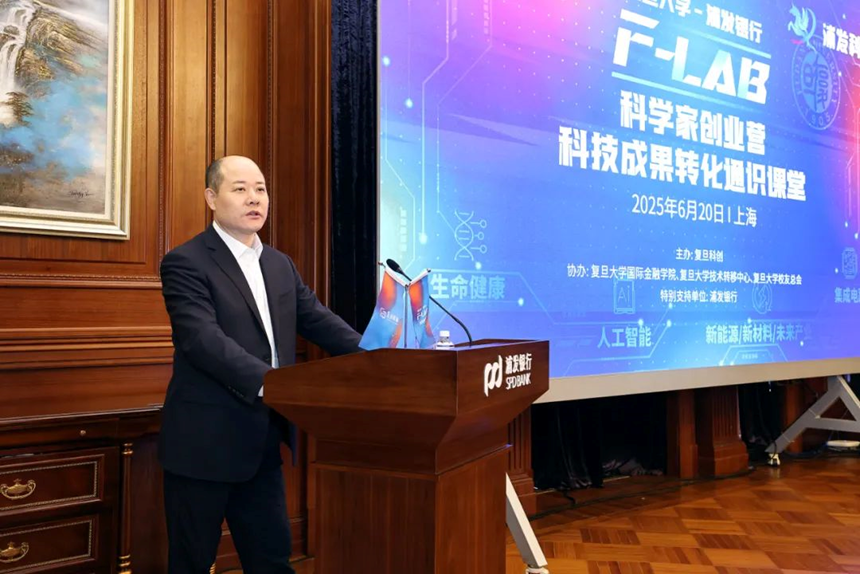
Weizhong Zhang, Secretary of the Party Committee and Board Director of Shanghai Pudong Development Bank
Teaching class in the mobile classroom of “Fudan University - Pudong Development Bank F-LAB Scientist Entrepreneurship Camp”
To truly realize the in-depth “industry-university-research” integration, FISF actively participated in and promoted the construction of Fudan University - Pudong Development Bank F-LAB Scientist Entrepreneurship Camp. This program, initiated by Fudan University, sponsored and jointly built by Pudong Development Bank, organized by Fudan Science and Technology Innovation and assisted by Fudan University Alumni Association, aims to “empower technological achievement industrialization” and be “the partner of scientists”. Li Jin, President of Fudan University and Academician of CAS, stated at the opening ceremony of the first-session class of F-LAB Scientist Entrepreneurship Camp in April this year that the target of F-LAB is not to encourage professors to run companies, but to improve the maturity of technological research achievements entering into the market, leaving it to the professionals.
At the opening of the new building and 2025 innovation value transformation forum held lately, Minmin Dai, President of Shanghai State-owned Capital Investment Co., Ltd came up with the “patient capital” ecology; Jihua Xie, Chairman of Shanghai Technology Exchange, stressed the “technological factor market”, and Pengjun Sun, Director of Fudan Science and Technology Innovation, shared the concept of “being the partner of scientists”; all of which coincided with FISF’s explorations in the field of sci-tech innovation. These explorations were accelerating the push of laboratory “bookshelf” achievements to market “goods shelves”.
03
From “providing advice and suggestions” to “value co-creation”
Apart from talent cultivation, FISF has also been actively contributing its thinktank strength upon financial topics. Jun Qian held that the internationalization background of the professor team has granted FISF a unique “comparative advantage” in thinktank research. “Our professors mainly study Chinese issues, but they are equipped with global perspectives and able to learn from international experience, meaning that our policy advice are often more forward-looking, penetrating and feasible.”
In terms of the construction of Shanghai International Financial Center, FISF has taken an in-depth participation in the “14th Five-year” plan and is now providing advice and opinions for the “15th Five-year” plan. As for handling nationwide financial risks, which may involve real estate market regulation, local government debts and risks for small- and medium-sized financial institutions, the think tank team of the school has continuously conveyed its range of voices.
In addition, FISF has paid close attention to frontier fields like digital assets, green finance and climate change finance. “We wish to promote Shanghai as the climate change financial center in Asia during the “15th Five-year” period,” Qian had expectation for this, “this not only required interdisciplinary theoretical research, but also corresponding products and pricing systems launched by exchanges and financial institutions, which will eventually contribute to China’s “dual carbon” targets.”
And behind all of this is the continually expanding alumni network. “The alumni association is a platform for lifelong learning and common progress,” said Qian, “we have tens of thousands of global alumni in the of Fudan University network to rely on, which is quite a privilege for us alone.” FISF has also taken a series of measures to practice the idea of “lifelong learning”, such as inviting alumni to return to school and sit in on new courses for free.
04
Seeking “certainty” in “uncertainties”
“Finance is always going hand in hand with risks. Where there is high uncertainty, where financial opportunities lie.” He believed that the rapidly changing global political and economic landscape as well as the disruptive impact of new technologies such as AI, has posed both challenges and opportunities for financial schools.
The biggest challenge is still about “talents”. “In an era, full of both opportunities and challenges, how to attract and keep top talents is the core issue in front of us.” Jun Qian admitted. Though still young, FISF also needs to invest more to ensure the supply of “intelligence” in scientific research and teaching among the fierce global competition for high-end talents during the constantly growing process.
The next important point is how to deal with the impact of new technologies such as AI. “AI is overturning the existing teaching modes and scientific research paradigms. Students are doing homework with AI and teachers are checking their homework with AI. All these are just superficial presentation.” The deeper challenge is how to conduct resource distribution and talent layout in emerging fields with uncertainties such as technological finance, green finance and digital assets. “This needs dynamic adjustments, with both major investment and enough flexibility.”
Despite the many challenges, Jun Qian had great faith in the future of FISF. “The constantly developing and opening financial industry in China and the continual upgraded level of Shanghai International Financial Center are both historic opportunities.” He expressed his hope that FISF could continue to uphold the two major core strategies of “internationalization” and “embracing scientific and technological innovation” in the next eight years, breaking new ground in the changing situation and cultivating more complex financial talents that understand the national conditions of China while also having global perspectives.
Over the eight years, FISF has left its distinctive footprints on the path of internationalization and localization, academia and industry, risk and opportunities. To face the future, “we wish to gain victory in the variable environment.” This is not only an expectation for the school, but also a stimulation for all FISFers.
Article source: ThePaper.cn; Reporter: Xiaoyu Wang; Responsible Editor: Jie Yang; Proofreader: Jun Shi





 86-21-63895588
 Handan Campus: Building B, No.579 Guoquan Road, Yangpu District, Shanghai 200010