FISF X Bund FTC Exploring AI Precision Marketing Together | Info
Release time:2025-08-19
On August 13th 2025, FISF FinTech Research Center successfully held a new session of FIRESIDE CHAT with the assistance of Huangpu Science and Technology Innovation Group (Bund FTC), carrying out a lively sharing and interaction with the topic of AI precision marketing. This time the Fireside Chat had a grand opening at the core landmark area in Shanghai, with Shanghai Pudong Development Bank, Shanghai Academy of State-owned Assets Operation & Management and other institutions getting deeply involved, witnessing the in-depth integration of fintech and artificial intelligence.
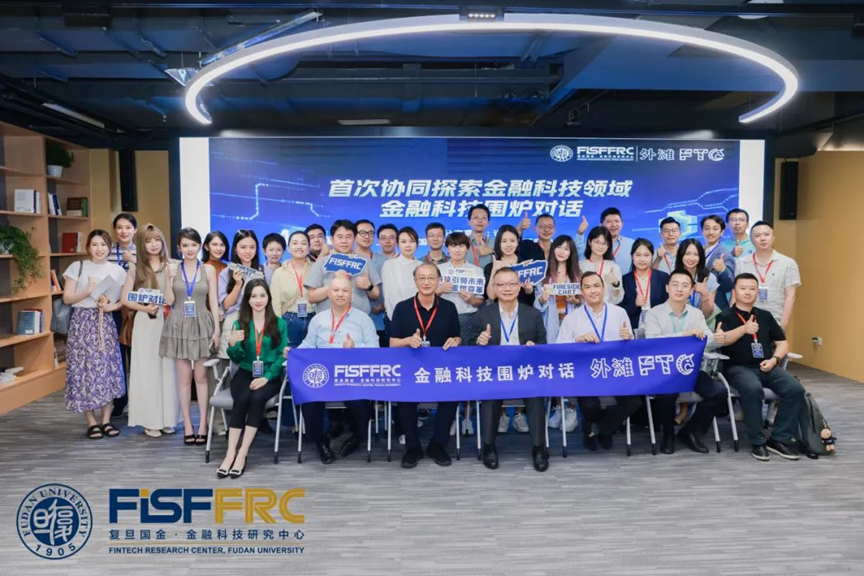
Professor Charles Zhang, Deputy Dean of Academics at FISF and Director of Fintech Research Center, attended the chat with FRC core member, Professor Huanzhang Xu were especially invited to be a sharing guest, and Professor Zhenhua Wang, Co-director of Fintech Research Center, who jointly hosted the discussion. Other guests present at the activity included representatives of companies like L’Oréal, Natural Beauty and GreenTown, and experts in the financial industry, who had in-depth dialogues upon the topic of how to conduct precision marketing with AI. Professor Xu demonstrated the evolution and iteration of the marketing industry with the development of the times, and brought frontier opinions for participants.
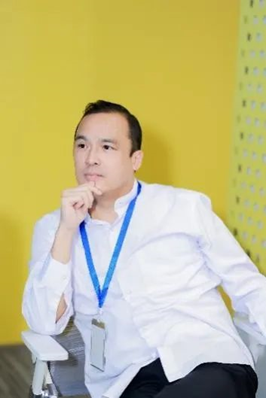
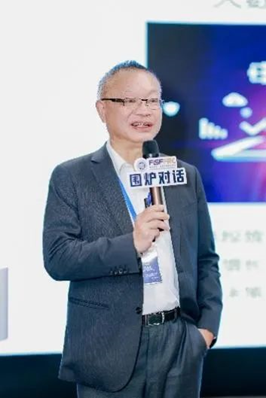
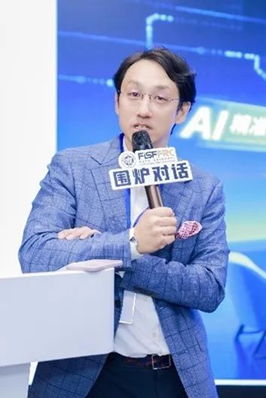
张纯信 许焕章 王振华
Charles Zhang Huanzhang Xu Zhenhua Wang
The Nascent Stage of AI
Professor stated that the goal of AI precision marketing is a “tailored experience for each individual, and that enterprises choose to be digitized one after another in order to acquire the data operation capability. Customer data becomes the key, and algorithms like RFM and neural network have also been applied to marketing. Actually, brands have long been promoting precision marketing with AI, such as the RFM algorithm and neural network algorithm.
The Omnichannel Integration Phase
With business modes beginning to change and digital marketing entering the omnichannel era, online-offline integration requires unified data and tagging system to generate customer profiles. As tags gradually expand from a few dozen to larger numbers, the granularity becomes increasingly refined. Each time a customer group is segmented and certain contents are posted, the A/B testing is employed for validation and review, followed by marketing optimization.
AI-Powered Omnichannel Marketing
Since the wide application of AI, private domain membership operation has been upgraded to AI-powered omnichannel marketing, extending the starting point of private domain to potential customer reach. Enterprises integrate CRM and DMP into CDP to identify customers with unique ID, realizing precision targeting across scenarios. The evolution from Adtec to Martec is essentially a promotion of precision marketing and automatic marketing via digital instruments.
Generative AI Applications
Generative AI has become an important facet of marketing. Through procedure optimization in the first place, AI Agent is considered staff in position and trained to be equipped with professionalism. With AI responsible for specific implementation and human experts reviewing and approving, it can be sure that intelligent agents can handle marketing tasks and forming a closed loop.
During the Q&A link, a guest questioned about the biggest challenge and critical factors in the end-to-end implementation and rollout process of AI marketing.
The biggest challenge in AI marketing is “humanity.” In the traditional organization mode, teams often rely on past experiences and lack data-driven thinking, easy to resist in face of AI transformation. In cross-department collaboration in particular, promotion can be hindered due to differential professional goals across different functions. Precision marketing is not just a technical issue, but more a project of institutional reform. To truly put it into practice, enterprises first need to adjust their organizational structures and procedures, break departmental barriers and establish unified data cultures. Meanwhile, this is not a one-time investment, but rather a long-term, sustainable process, requiring constant iteration. Only with a strategic forward-looking vision can leaders lead their teams to a successful transformation of thinking and mode, thus truly create value with AI marketing.
The location of this activity is also where the co-organizer of this activity, Bund FTC co-operated by Huangpu Science and Technology Innovation Group and Shanghai Pudong Development Bank, lies. No. 69 of Jiujiang Road, Huangpu District, Shanghai, the core area of the “second-facade” renewal district of the Bund, is next to the Nanjing Road East Business Circle, densely concentrated with financial institutions and historic architecture. In the past many foreign banks gathered here, giving it the name of the “Wall Street of the Far East.” Having developed from the “Wall Street of the Far East” in the last century to the FTC Eco-Cluster Zone today, Bund FTC has long extended its reach beyond physical constraints and turned into a testing ground for symbiotic ideas as well as a shared canvas for global innovators to paint the future upon. In the future, Bund FTC will invite the whole world here with an open attitude to exchange ideas and create values, catalyzing the formation of an open, innovative and dynamic industrial cluster.
FISF Fintech Research Center (FFRC) is a research center studying industries and enterprises worldwide. It has gathered several researchers, scholars, experts and thought leaders with qualifications in various fields from relevant industries, academic disciplines, non-government organizations and government institutions. It provides a window for international expert communities to cooperate and interact with China, providing more professional, authoritative, sustainable and practical research for enterprise development and driving greater value by leveraging core fintech technologies (AI, Blockchain, Cloud, Data) with innovation.
For the first time, the two parties collaboratively explored possibilities for deeper cooperation in fintech fields, presenting a diversified fintech ecosystem applied to enterprises, which plays a positive role in pushing forward industrial development. Both parties look forward more opportunities for cooperation and development in the future.





 86-21-63895588
 Handan Campus: Building B, No.579 Guoquan Road, Yangpu District, Shanghai 200010