2025 International Financial Technology Forum is Successfully Held at Shanghai Science Hall | Info
Release time:2025-11-18
On November 13, 2025, the “2025 International Financial Technology Forum and the 9th Annual Lun Fintech Roundtable” hosted by Fudan International School of Finance and Lun Partners Group was successfully held at Shanghai Science Hall (Huangpu District). The forum converged senior representatives from financial institutions, technological enterprises, the investment field and the academic globally, who gathered together to explore deeply into the cutting-edge development trend of the fintech field and jointly seek new opportunities for industrial coordination and synergy by concentrating on the core topic of “Technology Driving the Future of Cross-Border Payments, Wealth Management, and Industry Transformation”.
In forms of keynote speeches and roundtable dialogues, the forum built a platform for in-depth industry-university-research exchange, providing valuable intellectual cross-pollination for reshaping global value chains and digital transformation of industries. As the supporting unit of the forum, FISF Fintech Research Center gave full play to its bridging function between fintech academic research and industrial practice, offering professional support to the forum.
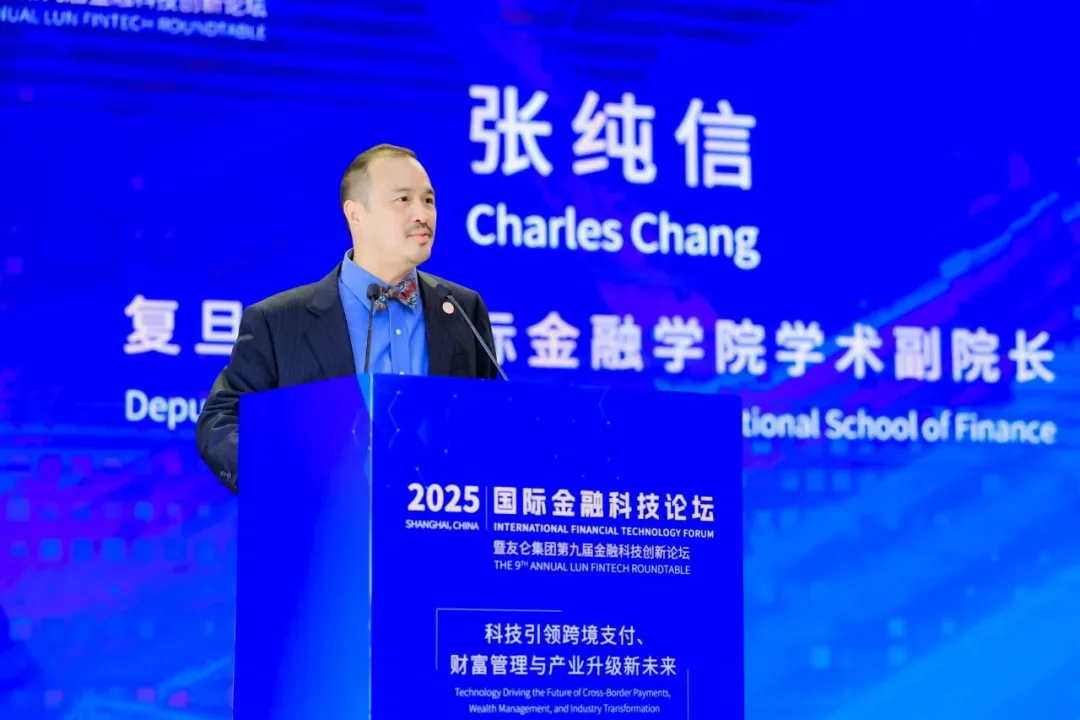
Charles Chang, Deputy Dean of FISF and Professor in Finance, listed three understandings in his speech: the first is about learning. As for the topic of the forum, he cited the phenomenon of “phone calls getting through but no receipt of funds” to highlight bottlenecks in global coordination; and the “WealthCare” concept illustrates the potential for technology to drive personalized wealth management; while artificial intelligence is also transforming from raising efficient to generating new business patterns. Second, integration. With technological boundaries increasingly blurring, and data intelligence, blockchain and cloud computing increasingly interdependent, payments, smart technology and wealth management industries will be set to converge deeply. Therefore, the academia, industry and regulators must collaborate to advance talent development, technological innovation and regulatory compliance. Third is shared growth. He noted that the forum has consistently upheld a pragmatic and open philosophy, fostering a platform for genuine dialogue. It is hoped that everyone should maintain openness and inclusiveness, co-creating the future through the exchange of ideas.
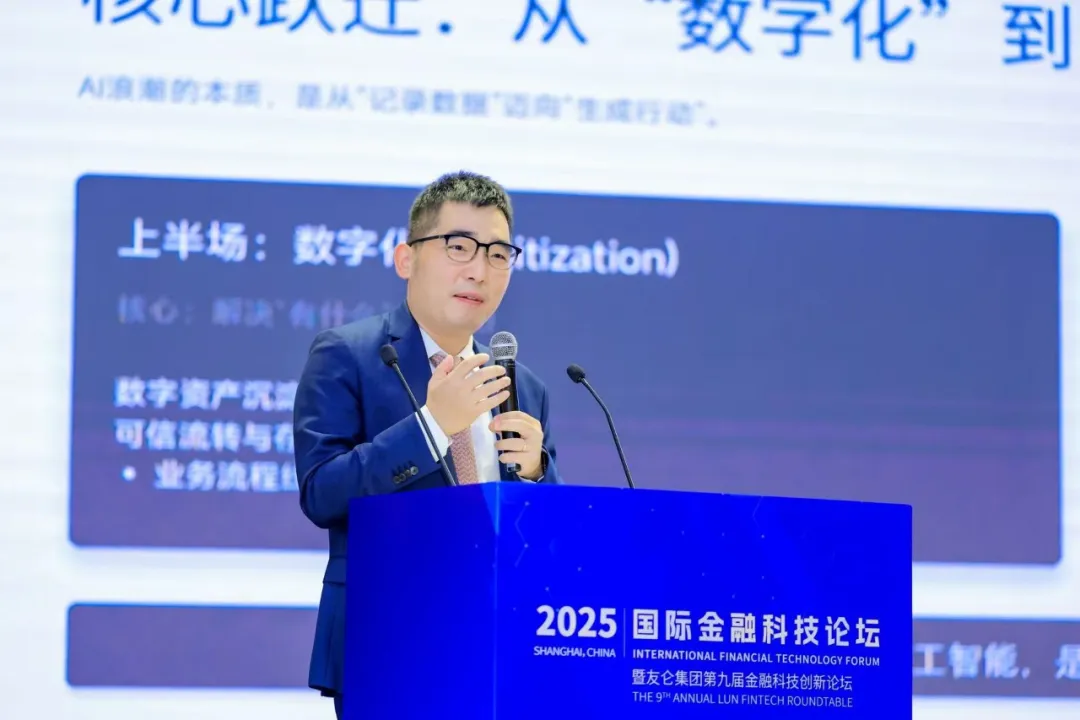
Huasheng Gao, Deputy Dean of FISF and Professor in Finance, gave a keynote speech entitled Large Language Models Empowering Financial Industry Upgrading. He pointed out that large language models are restructuring finance and the real economy. Taking historical contract documents as an example, he demonstrated how AI transforms unstructured historical data into analyzable digital assets. He stressed that large language models, able to transcend the limitations of traditional intelligent customer service, can process massive datasets, rapidly extract insights, and enable highly personalized robo-advisory services. Furthermore, they can simulate and forecast data from R&D, production and finance, leading to more precise and forward-looking financial decisions. Ultimately, this enhances the ability of financial institutions to serve the real economy and drives innovation in risk control and asset pricing. As he concluded, not only have AI and large language models pushed forward the upgrading of the financial industry; they have also stimulated the development of the real economy, forming a mutually reinforcing flywheel effect.
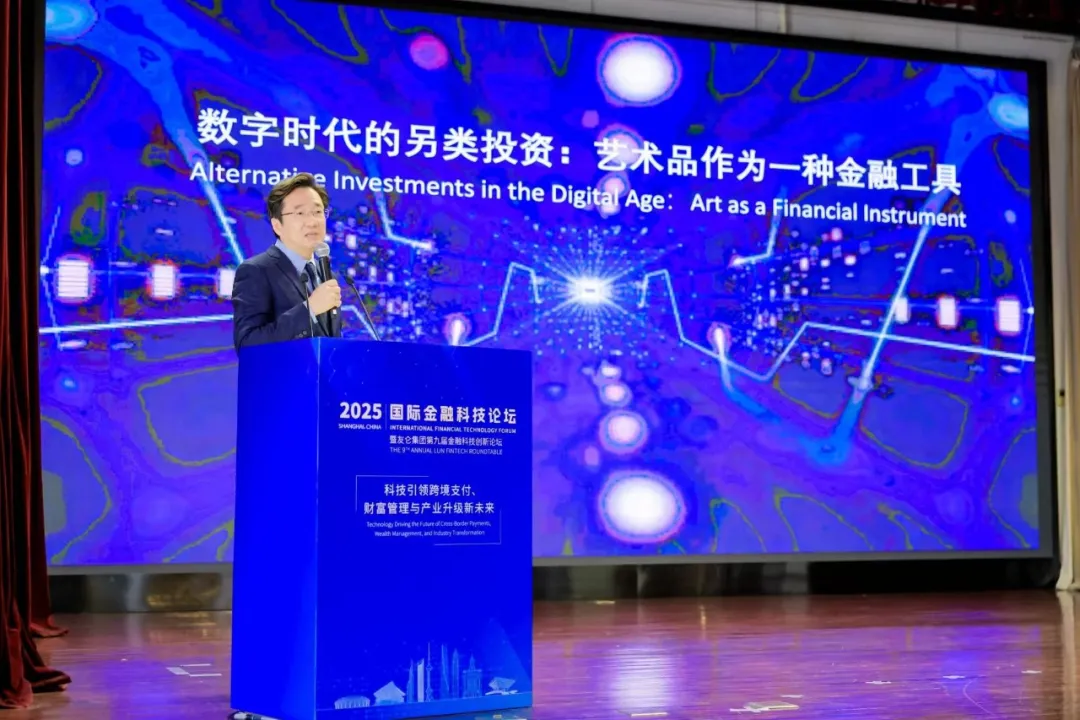
Wenrui Huang, Professor in Finance at FISF, made a keynote speech entitled Alternative Investing in the Digital Age: Artwork as a Financial Instrument. He indicated that artwork displays an exceptionally low correlation with traditional financial assets, and has exhibited remarkable resilience and a leading recovery pattern across multiple market cycles over the past century: while equities and real estate experience significant volatility, art prices often remain stable or even appreciate counter-cyclically, and tend to rebound earlier during recovery phases. Furthermore, the long-term returns on works by top-tier artists have far outstripped those of many traditional asset classes. The liquidity derived from their scarcity and high recognition further establishes art as a crucial tool for high-net-worth individuals to diversify risk and manage wealth across economic cycles. He believed that the emergence of contemporary art and digital art is now expanding the new frontiers of art finance, gradually making artwork a pivotal alternative asset within the new generation of wealth architecture.
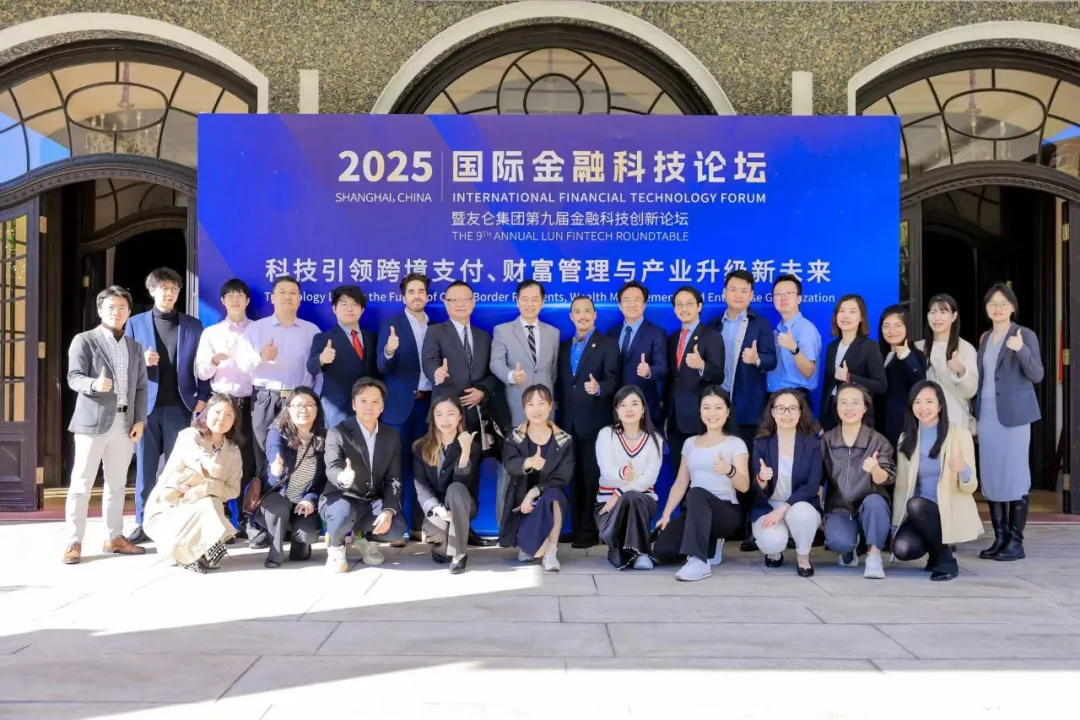
It is noteworthy that dozens of student representatives and alumni representatives of FISF were also invited to the forum. By listening to cutting-edge insights in the industry at a close distance, they made a deep combination of classroom theories and industrial practices and further boosted the collaborative industry-university-research-application development, injecting more vitality into innovative breakthroughs in the fintech field.





 86-21-63895588
 Handan Campus: Building B, No.579 Guoquan Road, Yangpu District, Shanghai 200010