Energy Transition and Green Investment and Financing under New Globalization - 2026 Green Finance Sub-forum of Shanghai Forum is Successfully Held | Info
Release time:2026-04-30
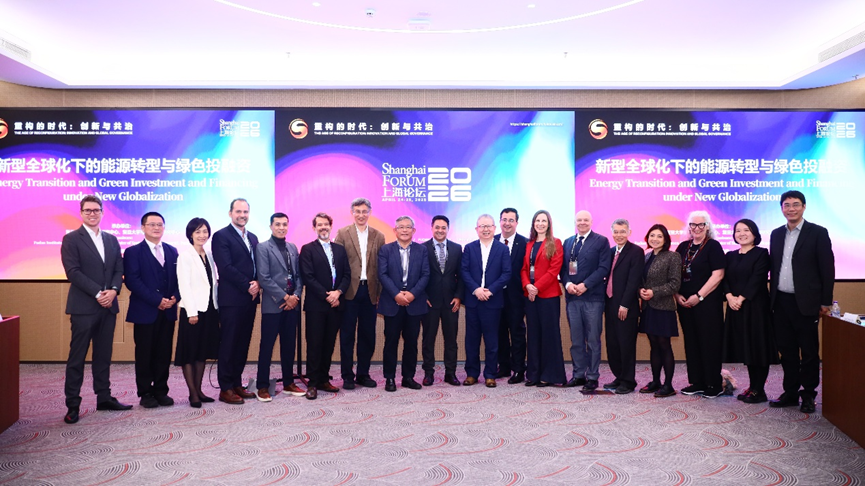
On April 25th 2026, the 2026 “Energy Transition and Green Investment and Financing under New Globalization” Sub-forum of Shanghai Forum was held successfully at the third floor of the Xuguihua Lecture Hall, School of Economics, Fudan University, co-hosted by Fudan University and Chey Institute for Advanced Studies, co-organized by Fudan Institute of Green Finance and Fudan Research Center of Sustainable Development, and in partnership with Institute for Climate and Society (iCS), Centro Brasileiro de Relações Internacionais (CEBRI) and other institutes. The forum released the Progress Report on the Construction of China’s Green Financial System and invited nearly 20 distinguished guests from both at home and abroad to deliver speeches.
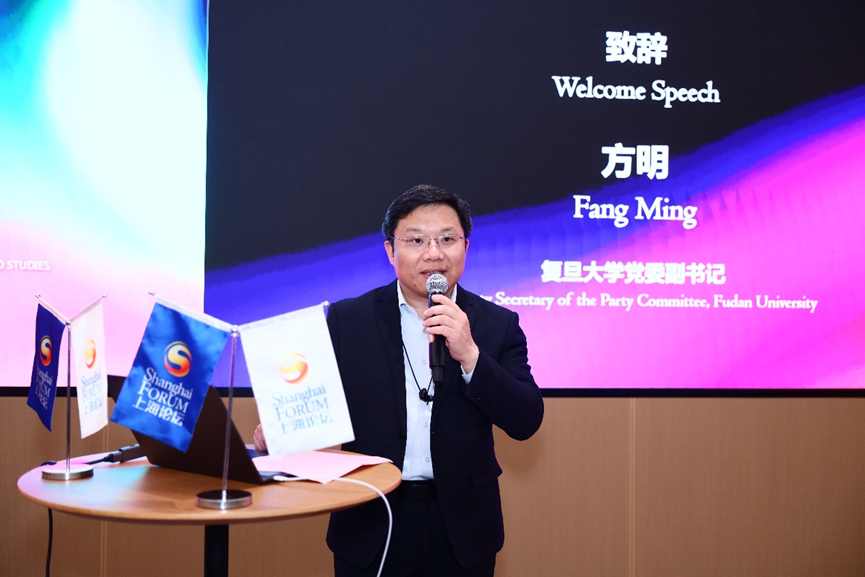
This forum was chaired by Shiyi Chen, Distinguished Professor in Finance at FISF and Director of Fudan Institute of Green Finance. Ming Fang, Deputy Secretary of the Party Committee, Fudan University, gave the welcome speech, and Yuejiang Li, Secretary of FISF Party General Branch and Secretary of the Branch Party Committee of the School of Economics, moderated the keynote speech sessions.
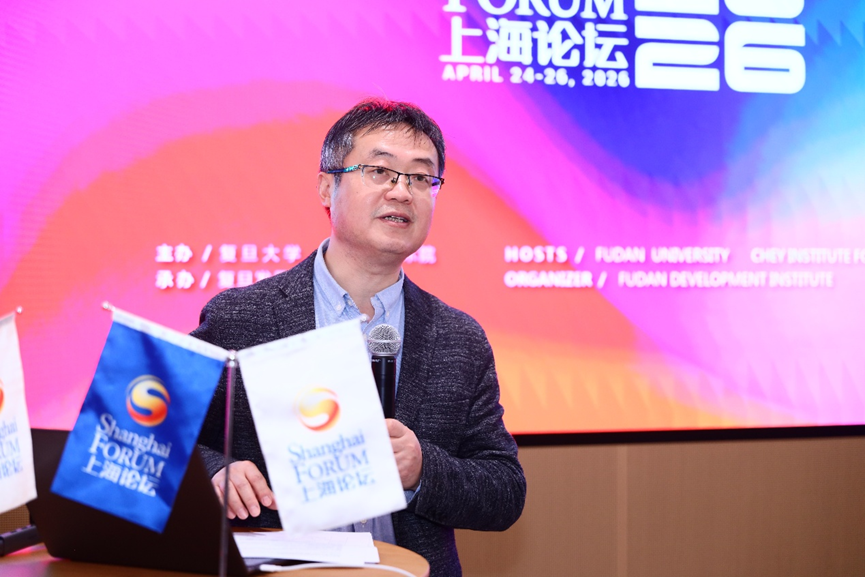
At the beginning, Ming Fang, Deputy Secretary of the Party Committee, Fudan University, warmly welcomed the participating guests, and expressed thanks to the organizing and cooperating institutes. He noted that against the background of China’s “15th Five-Year” Plan being fully implemented and the carbon peak target entering a critical sprint phase, energy transition and green investment and financing have become key bridges in building new globalization. This sub-forum focuses on green cooperation between China, Brazil, and Global South countries, aiming to contribute Fudan wisdom to forging a more equal, inclusive and sustainable global development.
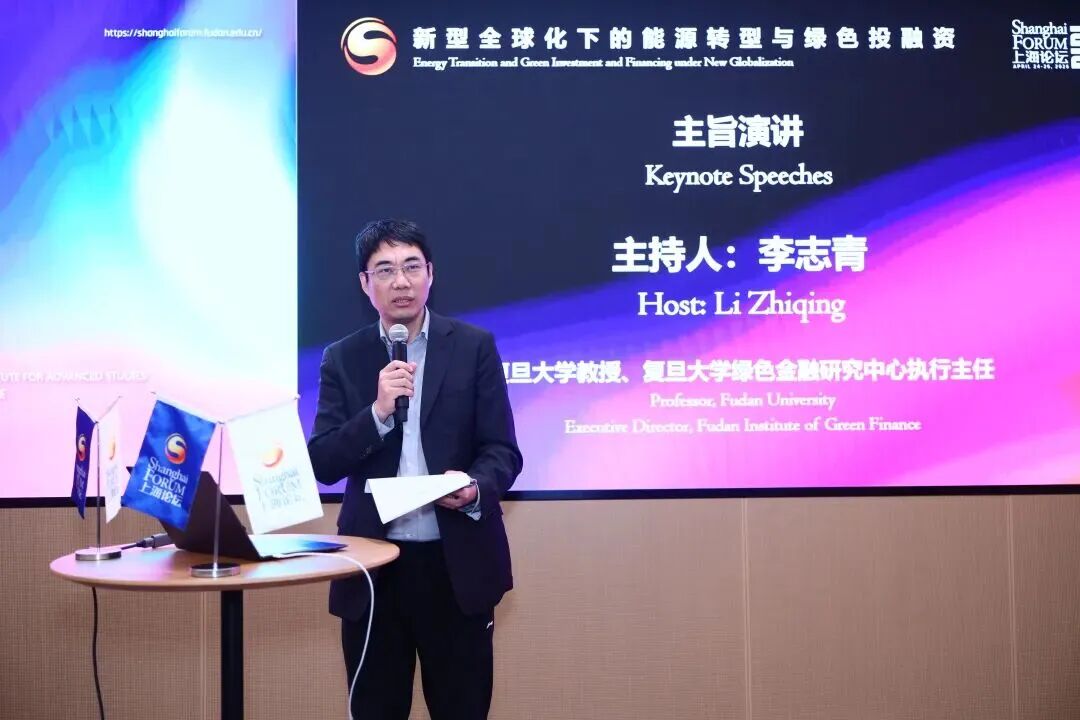
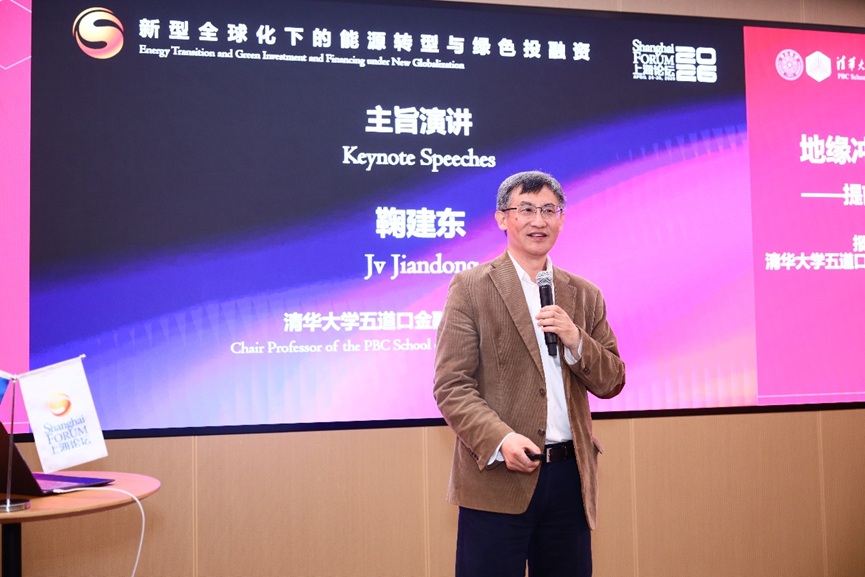
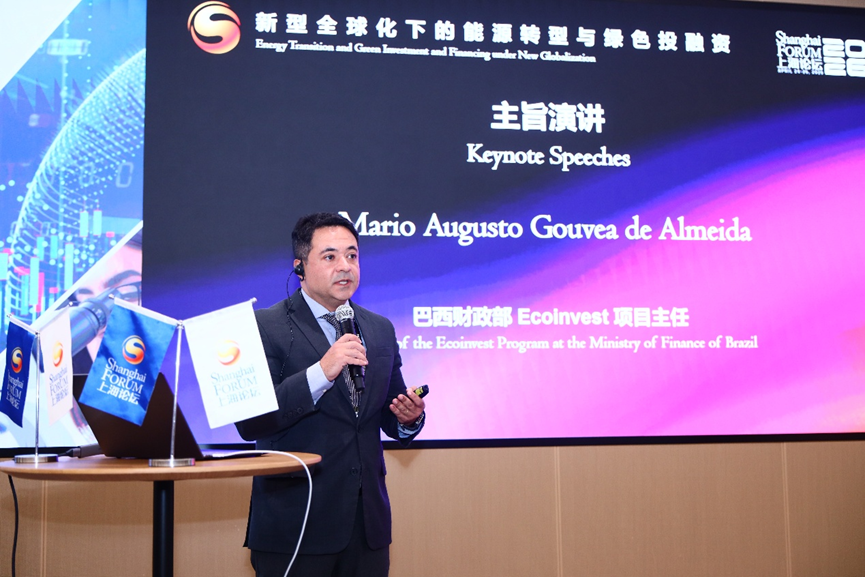
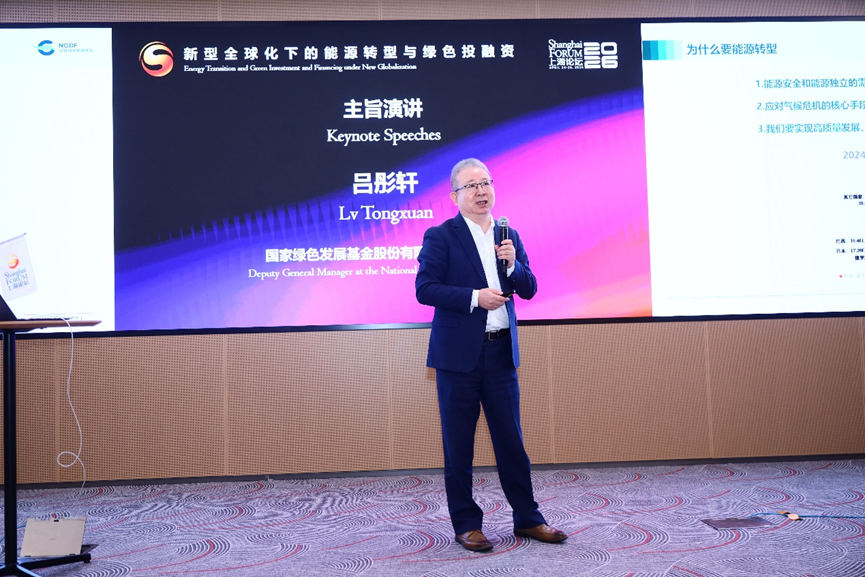
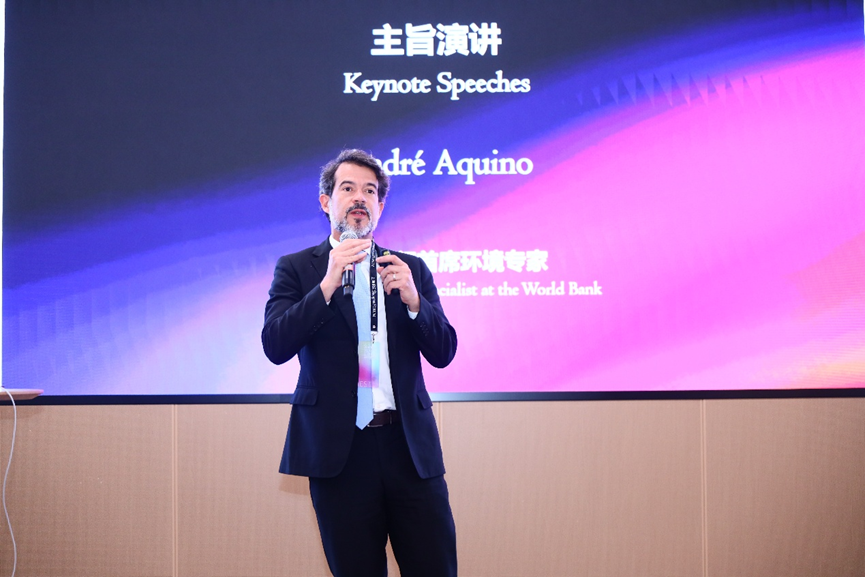
The first session of the forum featured keynote speeches. Jiandong Ju, Chair Professor at the PBC School of Finance, Tsinghua University; Mario Augusto Gouvea de Almeida, Director of the Ecoinvest Program at the Brazilian Ministry of Finance, Tongxuan Lyu, Deputy General Manager of National Green Development Fund Corporation; André Aquino, Chief Environmental Specialist at World Bank; and other distinguished guests shared their insightful perspectives on topics such as energy transition investment and financing, standards for green finance and cross-border capital flow. Zhiqing Li, Professor at Fudan University and Executive Director of Fudan Institute of Green Finance, acted as the moderator.
Jiandong Ju delivered a keynote speech on the theme of geopolitical conflicts and accelerating the green transition. He stressed that geopolitical conflicts are intensifying volatility in global energy supply and demand, bringing the relationship between energy security and low-carbon transition into sharper focus. In face of the “dual carbon” goals and the practical demands of energy restructuring, China must steadily advance its green transition, enhance the resilience of its energy system, and push forward the upgrading of its industrial structure on the basis of ensuring energy security. Through an in-depth analysis of geopolitical conflicts and green transition, he systematically demonstrated a feasible pathway for China to achieve carbon neutrality ahead of schedule—around 2040. Furthermore, he elaborated on key measures including optimizing energy structure, promoting green technologies and coordinating policy implementation, providing a rigorous academic reference for China to seize the critical window for green development while balancing energy security and low-carbon transition.
Mario Almeida shared the latest practices of Brazil in green investment incentive policies and the Ecoinvest program. He emphasized that as both China and Brazil are major developing countries, there is vast potential for cooperation on low‑carbon transition. The two sides can leverage innovative financial instruments specifically designed for ecological investment, mobilize both public and private investment with low-cost capital, and deepen practical industrial cooperation in areas such as clean energy, green fertilizers, critical mineral processing, the circular economy, and AI-driven synergies. By improving the business environment for cross-border green investment, China and Brazil are expected to further advance the development of the green real economy and provide more practical models for green and low-carbon cooperation among Global South countries.
Drawing on the operational experience of the National Green Development Fund, Tongxuan Lyu shared the practical outcomes of how green funds empower energy transition and the efforts in “dual carbon” goals, and introduced several key investment cases in clean energy. He proposed that state-owned green capital should adhere to a long-term value investment orientation while balancing financial returns, ecological benefits and social impact at the same time. He called for sustained efforts in priority areas such as new-type energy storage, green methanol and the circular economy, promoting the cultivation of green productivity and low-carbon, high-quality economic and social development.
André Aquino analyzed the financing gaps and potential solutions for energy transition in Global South countries from the perspective of multilateral development banks. He suggested an integrated approach that advances both green energy transition and ecological land restoration, facilitating the exchange of technologies, experience and resources between China and other countries through multilateral platforms, raising the efficiency of ecological governance with artificial intelligence, and attracting more private capital to participate by developing innovative blended green finance mechanisms. With deepened China-Brazil cooperation in ecological restoration and sharing of China’s practical experience in ecological protection, it would hopefully be possible to further boost the coordinated progress of ecological protection, land quality improvement, and regional economic development.
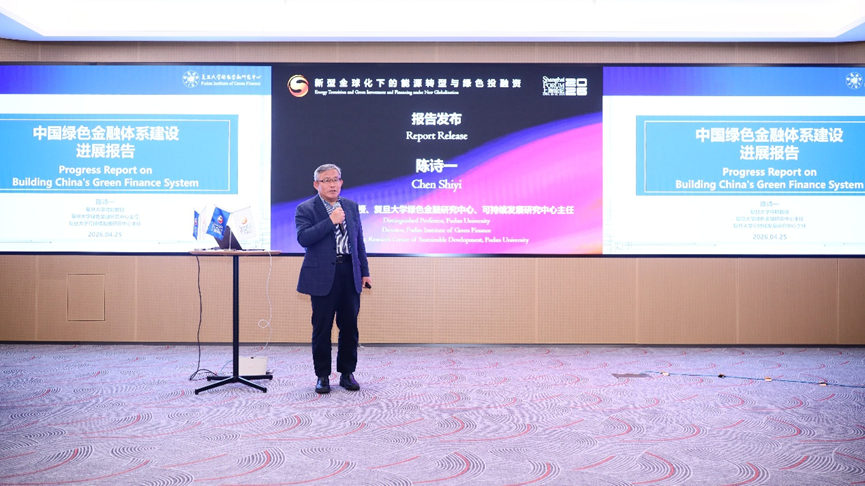
Subsequently, the forum proceeded to the report release session. Shiyi Chen released the Progress Report on the Construction of China’s Green Financial System. The report systematically reviews the decade-long journey and the latest progress in the construction of China’s green financial system. With reference to the current juncture—the first year of the “15th Five-Year” Plan, Professor Chen offered a scientific assessment of the multiple challenges facing green finance development from macro, meso and micro perspectives. These challenges include insufficient total contribution and market functionality, structural imbalances and weak coordination, as well as a need to improve the effectiveness of policy instruments and market mechanisms.
In response, he proposed six targeted measures: refining the top-level design of green finance, strengthening its three core functions, optimizing incentive and constraint mechanisms, deepening market-oriented reforms, enhancing multi-dimensional coordination, and stepping up global cooperation on green financial governance—comprehensively escorting the orderly pursuit of the “dual carbon” goals.
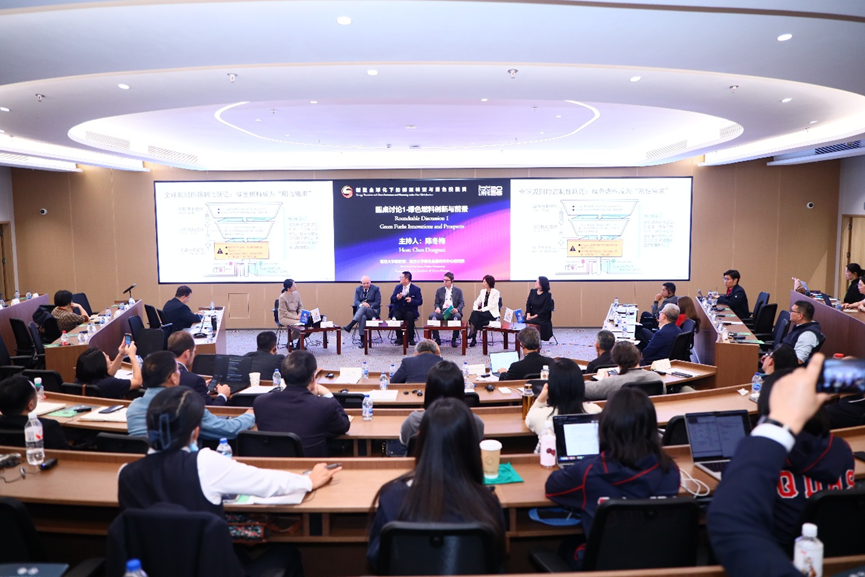
The third session of the forum consisted of two summit roundtable dialogues
“Roundtable Dialogue I: Green Fuel Innovation and Prospects” was moderated by Dongmei Chen, Associate Professor at Fudan University and Researcher at Fudan Institute of Green Finance. Ugo Panizza, Professor in Economics at the Geneva Graduate Institute of International and Development Studies; Hongyuan Yu, Distinguished Chair Professor at the School of Politics and International Relations, Tongji University; Vilmar Thewes, Sustainable Finance Manager at Banco do Brasil; Rui Li, Director of the Green Finance Center, SPDB Head Office; Sujiao Bao, General Manager of Wenzhou High-Tech Hydrogen Energy Technology Co., Ltd.; and other guests participated in the dialogue. The experts exchanged views on topics such as green fuel technology innovation, bottlenecks in industrial deployment, challenges in cross-border green investment and financing, and prospects for China-Brazil cooperation in green energy. They highlighted the need to address gaps in green fuel feedstock supply, technology adaptation, and infrastructure support; and to strengthen fiscal-financial linkages to facilitate the implementation of long-cycle industrial projects. Meanwhile, it was also put forward to deepen China-Brazil cooperation in green production capacity, cross-border settlement in local currencies, and alignment of green standards; and lower financing costs and gather long-term patient capital via a variety of green financial instruments, working together to build a full-industry-chain ecosystem for green fuels and joining forces to seize the opportunities presented by the global energy transition.
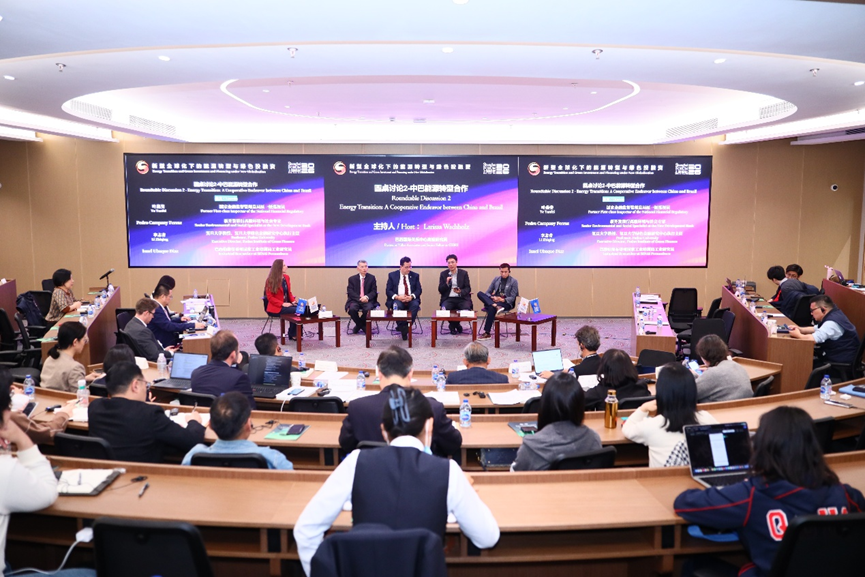
“Roundtable Dialogue II: China-Brazil Cooperation in Energy Transition” was moderated by Larissa Wachholz, Senior Researcher at CEBRI. Yanfei Ye, Former First-level Inspector of National Financial Regulatory Administration; Zhiqing Li, Executive Director of Fudan Institute of Green Finance; Pedro Campany Ferraz, Senior Environment and Social Specialist of the New Development Bank; Isnel Ubaque Diaz, Industry Researcher of National Industrial Training Institute in Pernambuco, Brazil, and other distinguished guests were present.
The experts explored the cooperation prospects and implementation pathways in areas such as green energy transition, cross-border green investment and financing, joint construction of power infrastructure, industrial synergy in hydrogen and biofuels, and coordinated development of energy storage and computing power, unanimously agreeing that China and Brazil, both as significant representatives of Global South countries, should join hands to develop a more equal and balanced global green governance system. Looking ahead, the two sides can further accelerate the mutual recognition of green standards and certification, establish a regular government-business cooperation mechanism, and seek an innovative cross-border green financing models based on local currencies. In addition, by jointly setting up dedicated green cooperation funds and share technical experience in energy transition, they can tackle practical challenges like mismatches between power supply and demand and continue to deepen full-chain cooperation in green energy.
Centering on the green and low-carbon development goal set out in China’s “15th Five-Year” Plan, this sub-forum made active responses to the China-Brazil joint statement on building a shared future for a more equal and sustainable planet. It explored the practical progress, opportunities and challenges in energy transition and green investment and financing across different countries and regions in the context of this new globalization, with a particular focus on deepening green cooperation between China, Brazil, and other Global South nations.
Through in-depth interactions, the participating guests reached a consensus that the deep integration of green finance and energy transition is a key pathway for addressing global climate challenges. Moreover, practical cooperation between China, Brazil, and other Global South countries will inject strong green momentum into this new globalization.
(Content Source: Fudan Institute of Green Finance)





 86-21-63895588
 Handan Campus: Building B, No.579 Guoquan Road, Yangpu District, Shanghai 200010