Professor Huasheng Gao Releases a New Book — RWA: How RWA Reshapes Global Finance | Info
Release time:2026-05-12
As finance moves from the “Internet of Information” to the “Internet of Value”, assets are also entering an entirely new era. RWA (Real World Assets) is not simply about moving traditional assets onto the blockchain; it is an infrastructure-level transformation encompassing asset ownership verification, trading, clearing, dividend distribution, regulation, and global liquidity.
For ordinary investors, RWA is not a distant technological concept, nor merely an innovative experiment by large financial institutions. It may change the way we access and allocate assets as well as understand financial markets in the future. Today, many high-quality assets remain inaccessible due to high thresholds, low liquidity, cross-border restrictions and complex intermediary systems, such as overseas bonds, money market funds, real estate equity, commodities and private credit. The core significance of RWA lies in enabling these assets, under the premise of compliance and controllable risk, to be recorded, divided, traded and managed in a more transparent, more efficient and lower-threshold manner.

Huasheng Gao
Deputy Secretary of FISF General Party Branch
Deputy Dean of Faculty and Research
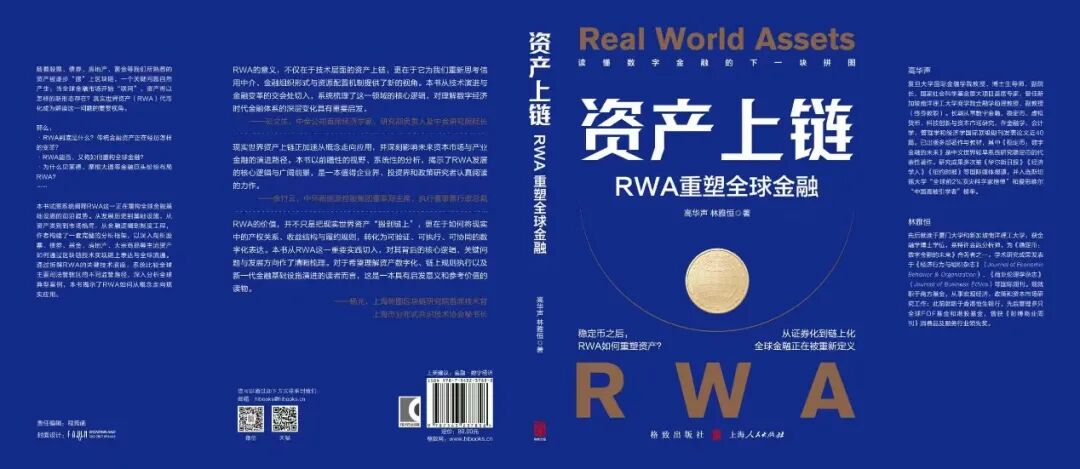
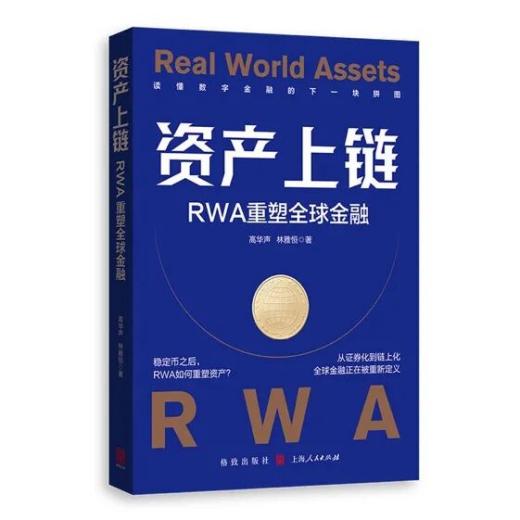
RWA: How RWA Reshapes Global Finance is coauthored by Professor Huasheng Gao, Deputy Secretary of FISF General Party Branch and Deputy Dean of Faculty and Research, and Industry Expert Dr. Yaheng Lin. Huasheng Gao has studied digital finance, stablecoins, crypto assets and capital markets for long, equipped with both an international forefront research perspective and a concern for China’s financial practice. This book is also another systematic reflection of the authors on the transformation of digital financial infrastructure, following the publication of Stablecoins: The Future of Digital Finance in August 2025. The two books are companion volumes: the former explores “on-chain currency” while this book focuses on “on-chain assets”.
The book systematically traces the evolutionary logic of RAW from tokenization to the “Internet of Assets”, and provides in-depth analysis of core infrastructure like blockchain, smart contracts, oracles, and cross-chain bridges. Drawing on typical scenarios including equities, funds, real estate, commodities, bonds, private credit, and computing power assets, it also showcases how real assets can become programmable, composable, verifiable and globally circulated on-chain. RWA is not a short-term speculative concept, but a major direction for the evolution of global financial infrastructure over the next two decades, concerning not just how financial institutions restructure their businesses, but also whether ordinary investors can participate in global asset allocation, share in the returns of real assets, and understand the new risks and new opportunities of the digital finance era more conveniently in the future.
For financial practitioners, technology companies, regulators, investors, and all those following the future of Web3.0 and digital assets, this book serves as both a systematic primer and a roadmap for observing the next generation of the global financial landscape.





 86-21-63895588
 Handan Campus: Building B, No.579 Guoquan Road, Yangpu District, Shanghai 200010