Injecting New Vitality of Finance and Empowering Medical Innovation: Medicine-Finance Sci-Tech Innovation Pioneer Program of Fudan University Concludes Successfully | EE
Release time:2025-09-01
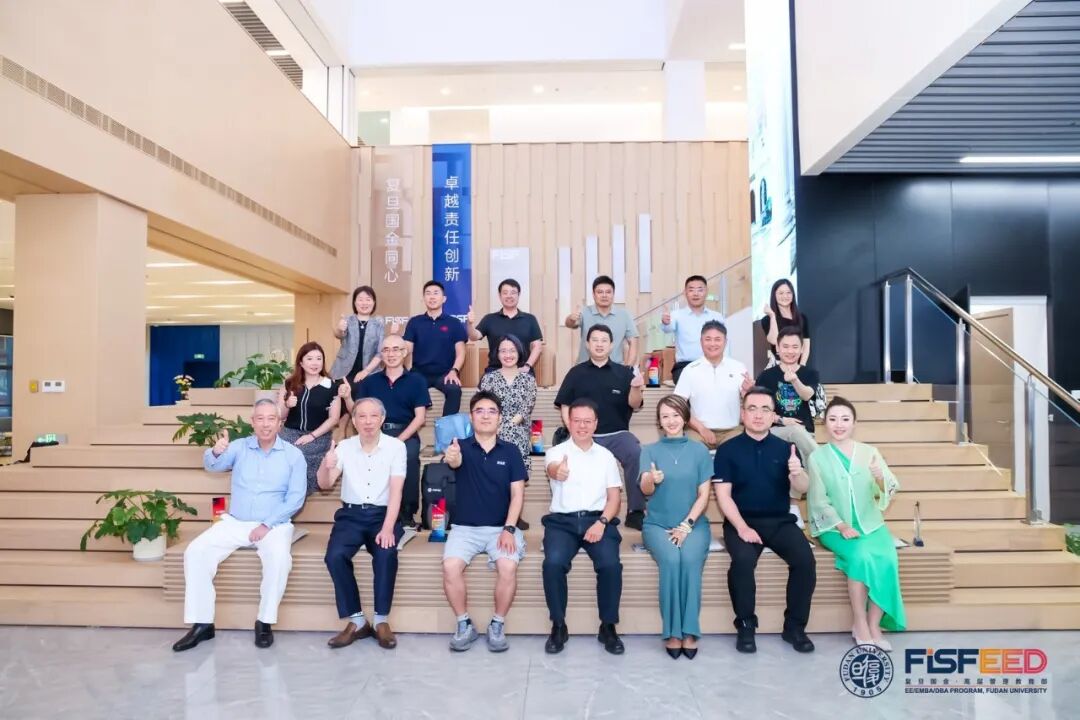
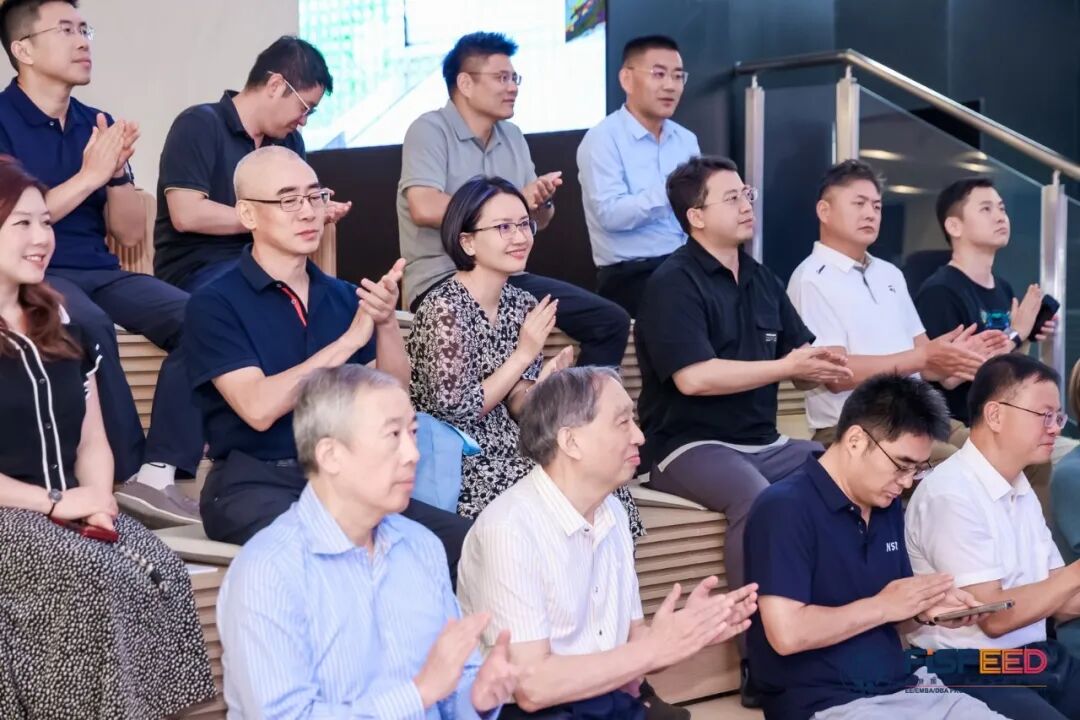
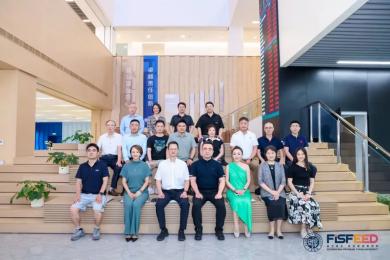
On August 23rd, the Module-7 course and graduation ceremony of the Medicine-Finance Sci-Tech Innovation Pioneer Program of Fudan University was successfully held at the new campus of FISF. Professor Jie Chen, Dean of the College of Biomedical Engineering, Fudan University, Yan Wang, Director of Executive Education Department (E.E.D), and Weifeng Xu, Deputy Director of Executive Education Program, attended the activity and conducted in-depth exchange with students.
This module course specially invited Professor Xin Ma, Secretary of the Communist Party Committee of Shanghai Sixth People’s Hospital, Director of the National Center of Orthopedics and Director of National Clinical Quality Control Center for Orthopedics, and Xingming Zhao, Distinguished Professor at Fudan University, Jointly Appointed Professor at Zhongshan Hospital and Deputy Director of Key Laboratory of Computational Neuroscience and Brain-Inspired Intelligence, Ministry of Education, to give keynote sharing. They respectively focused on the two hot topics of “an overview of sports, bone joint health, and advanced orthopedic technologies” and “exploration of brain disorders driven by AI and data,” and carried out heated interactions and discussions upon practical applications and industrialization paths with participating entrepreneur students.
01
Technological revolution in bones:
stepping into a new era of “intelligent restoration”
Starting from daily practice of sports and health and gradually extending to the latest progress and industrial prospect of orthopedic medicine, Professor Xin Ma brought the participating students a sharing course both practical and forward-looking.
Doing sports is an important way to maintain bone joint health, but excessive exercise or improper postures may lead to injuries. Professor Xin Ma systematically introduced the current categories, diagnosis and treatment status of orthopedic diseases, which covered a variety of issues like congenital malformation, acute trauma, chronic strain and age-related degeneration, and pointed out that right now the medical community is developing from traditional technologies like surgical approaches, internal fixation devices, tissue repair materials and external fixation methods to new frontier directions such as biotherapies, intelligent implants, big data and artificial intelligence.
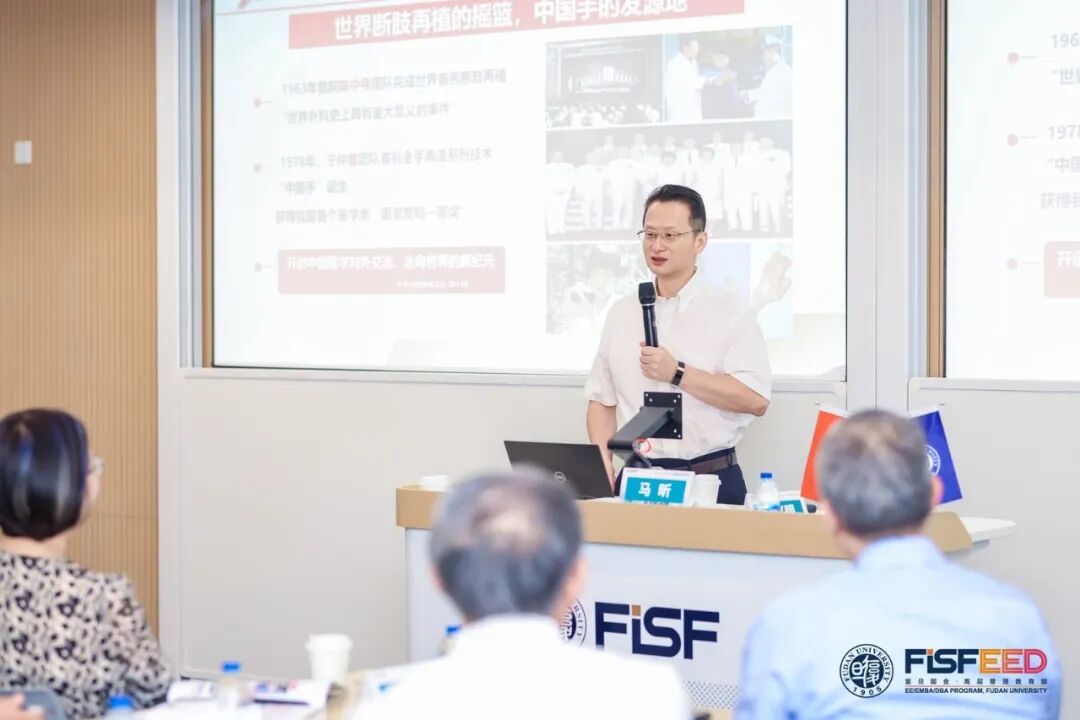
When it came to the future direction of orthopedic development, Ma emphasized several times the importance of “biotherapies” and “data-intelligence convergence.” He expressed that cell therapies and genetic engineering technologies are demonstrating significant potential in treating diseases like osteoarthritis and cartilage defects, while the combination of artificial intelligence and big data is expected to realize the full-cycle management encompassing disease prediction, surgical planning and postoperative rehabilitation. He especially noted that the Sixth Hospital is now constructing a multimodal orthopedic database, and opens cooperation channels for relevant enterprises and teams to make joint research and development.
On the other hand, he also acknowledged the over-competition phenomenon currently existing in certain booming sectors. For example, orthopedic robots and 3D printing may enjoy a promising prospect, but there aren’t many products that can be truly put into practice and widely applied. He warned that entrepreneurs should concentrate on actual clinical demands and avoid following the trend blindly. Besides, in traditional fields of joint replacement, bone grafting materials and biodegradable implants, there still exist many technological iteration and market opportunities.
At the end of his talk, Professor Ma concluded that orthopedic medicine is now going through a profound reform, from “mechanical fixation” to “biological repair”, from “experience-based surgery” to “intelligent surgery”. He called on doctors, scientific research institutions and enterprises to strengthen cross-domain cooperation and jointly facilitate the translation of innovative technologies into clinical practice for the ultimate benefit of the vast number of patients. As for questions raised by on-site entrepreneur students upon the clinical applications, market prospects and investment opportunities of cutting-edge orthopedic technologies, Professor Xin Ma gave brilliant responses one by one, presenting a feast of profound insights packed with substantive content.

02
AI’s breakthrough in neuroscience
Multimodal data integration to reshape the new paradigm for diagnosing and treating brain disorders
So far, brain disorders have become a major public health issue affecting billions of people worldwide, its morbidity and mortality even exceeding cancer.
“Unlike many other diseases, psychiatric disorders are hard to break through with traditional research methods due to a lack of clear pathological basis, complex pathogenesis and high heterogeneity.” Professor Xingming Zhao indicated that research on brain disorders is still facing great challenges. “The brain is a multi-scale complex system. Whether at the micro level of molecules, cells and neural circuits or at the macro level of brain function and human behaviors, only with multimodal data integration can we fully understand the operating mechanism.”
To solve these hard issues, the full-spectrum brain science data platform - Zhangjiang International Brain BioBank accordingly enters the discussion. As Zhao introduced, this is China’s first brain science database that is comprehensive, multimodal, cross-scale and multi-disease. So far it has collected data for over 17 thousand times, covering the five major brain disorders, namely schizophrenia, depression, stroke, Alzheimer’s disease and autism, as well as healthy control groups.
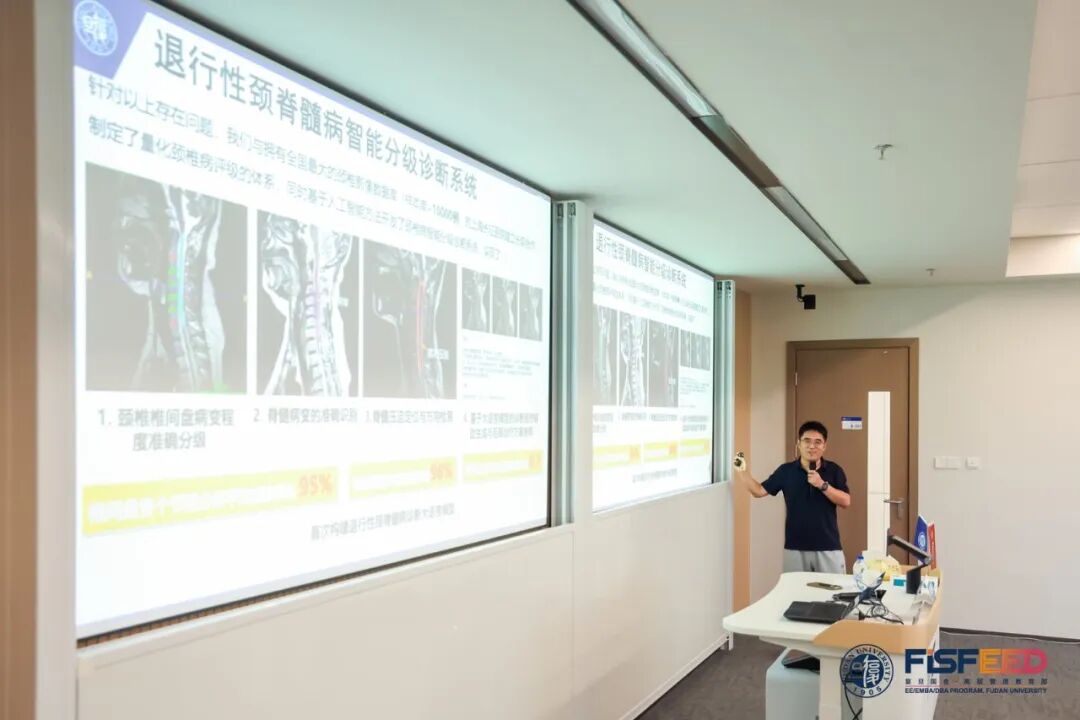
He also talked about the team’s exploration of medical AI transformation, such as the “digital fetal” AI-powered analytic system co-developed with Bodhibrain, which helps with early prenatal screening through multimodal data integration and management as well as AI application empowerment. In addition, the team also worked with Shanghai Changzheng Hospital in developing the intelligent grading and diagnosis system for degenerative cervical myelopathy. Via a model trained on a dataset of over 10 thousand cervical spine imaging studies, the system addresses key clinical needs such as precise grading of cervical disc degeneration, accurate identification of myelopathy, positioning and direction detection of spinal cord compression, and LLM-powered assistance in generating diagnostic reports and recommended treatment plans in later stages. By now it has been put into use in the hospital and won high recognition among doctors.
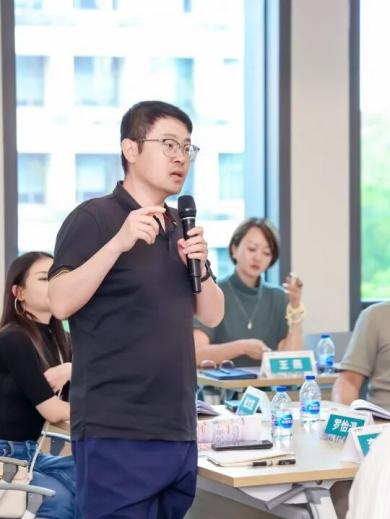

The integration of artificial intelligence and multi-omics data is pushing research on brain disorders deeper from macro description to micro mechanisms, from a single-disease focus to a comorbidity network approach, from general therapies to customized intervention. Professor Xingming Zhao held the viewpoint that interdisciplinary cooperation and innovation data interpretation will bring brain disorder research to a higher level.
03
In innovation resonance, embarking on the next leap:
jointly creating an efficient and interlocking healthcare technology innovation ecosystem
Since its launch in October 2024, the Medicine-Finance Sci-Tech Innovation Pioneer Program of Fudan University has been continuously refined and optimized, inviting many top experts from the academic and industrial communities to teach classes and leading students to visit multiple leading enterprises in the field of life and health science, top hospitals and key laboratories. Through in-depth exchange with enterprise founders and chief scientists, the students can understand the frontiers and transformation paths of the life and health science industry.
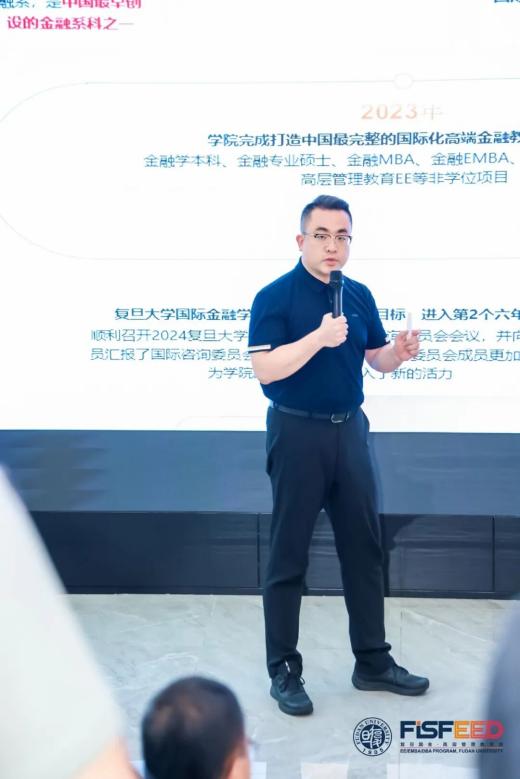
On that day, the first-session class solemnly held a graduation ceremony. Weifeng Xu, Deputy Director of Executive Education Program, reviewed the history of the course construction and combed the learning achievement of each module together with the students. He also sent his blessings to the students: may all of you take this graduation as a launchpad, forge ahead towards your vast dreams in the grand endeavor of science, and author a future beyond imagining.
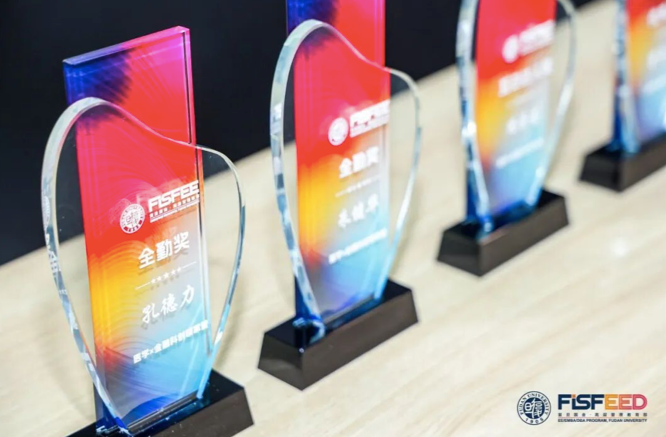
Yan Wang, Director of Executive Education Department (E.E.D), granted the perfect attendance awards, top engagement awards, excellent organization awards, outstanding contribution awards and best achievement awards to the students, praising them for their active participation and outstanding performances in the course.
Among them, Student Representative and CEO of EosVision (Suzhou) Biomedical Technology Co., Ltd. Chaoxian He’s enterprise closed a Series A round of nearly 100 million yuan at the end of 2024. The bio-artificial cornea project developed by the enterprise has entered the phase of clinical trials and is expected to restore sight to millions of patients with corneal blindness. Chaoxian He stated that the course has provided valuable support for him in resource connection and intellectual inspiration, which guided the enterprise to make essential breakthroughs.
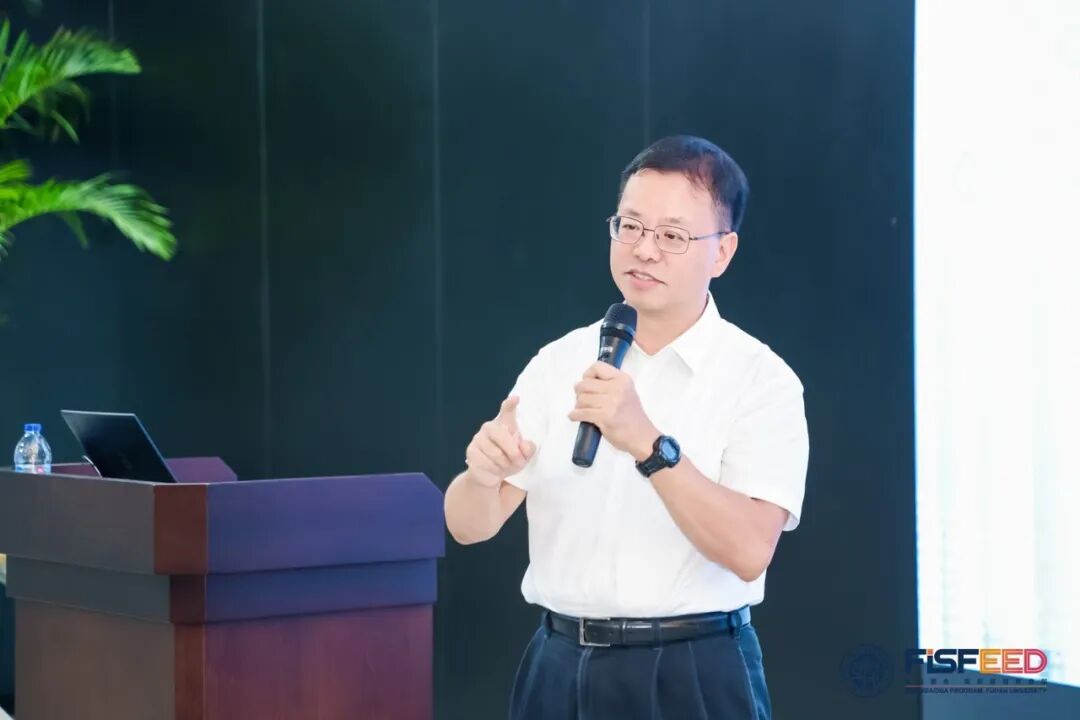
In his conclusion speech, Dean Jie Chen affirmed the achievements that have been obtained all along the way from conception to implementation, and encouraged the students to keep on promoting technological innovation and industrial transformation. He mentioned that the Medicine-Finance Sci-Tech Innovation Pioneer Program is not just an important exploration jointly conducted by Fudan’s College of Biomedical Engineering and FISF in “emerging engineering” construction and sci-tech financial integration, but more a key measure for the construction of an efficient and interlocking innovation ecosystem with “academia-industry-capital” integration. In the future, the school will continue to deepen such cross-domain programs to get more scientists and entrepreneurs through the transformation from the “bookshelf” to the “goods shelf,” and work with them to boost the innovation and development of China’s biomedical industry.





 86-21-63895588
 Handan Campus: Building B, No.579 Guoquan Road, Yangpu District, Shanghai 200010