[Live Review] Capital Market Outlook of China and the World in the Year of the Horse | Fudan Financial Public Course
Release time:2026-03-10
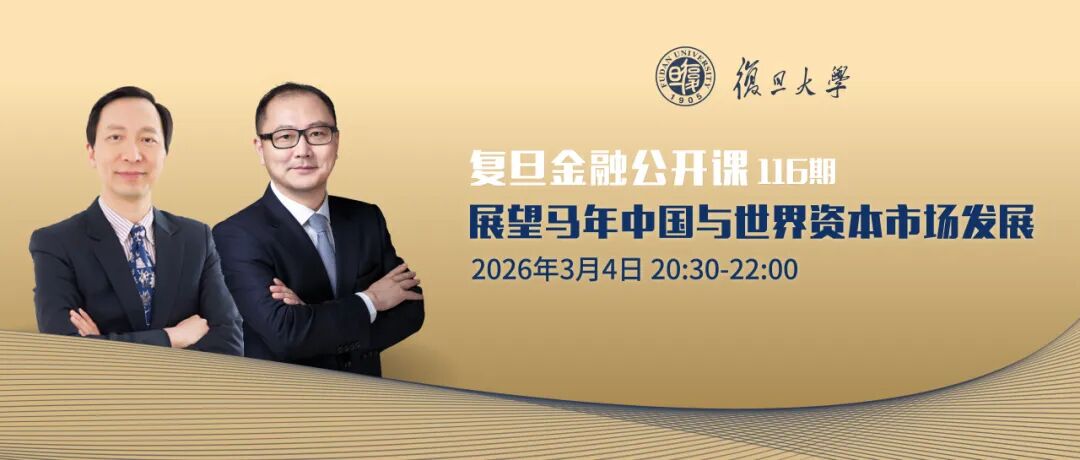
Fudan Financial Public Course Session 116
Capital Market Outlook of China and the World in the Year of the Horse
March 4th 2026 20:30-22:00
On the evening of March 4th 2026, the 116th session of the Fudan Financial Public Course was held online. Under the theme of “Capital Market Outlook of China and the World in the Year of the Horse”, it focused on cutting-edge developments in China and global capital markets, offering in-depth analysis on market dynamics, forward-looking structural opportunities, and investment pathways. Shang-Jin Wei, Editor-in-Chief of Fudan Financial Review and Tenured Chair Professor at the School of Business and School of International and Public Affairs, Columbia University, acted as the moderator; and Qing Wang, Chairman and Chief Economist of Chongyang Investment, as the keynote speaker.
Moderator

▲ Shang-Jin Wei
Editor-in-Chief of Fudan Financial Review
Tenured Chair Professor at the School of Business and School of International and Public Affairs, Columbia University
Keynote Speaker
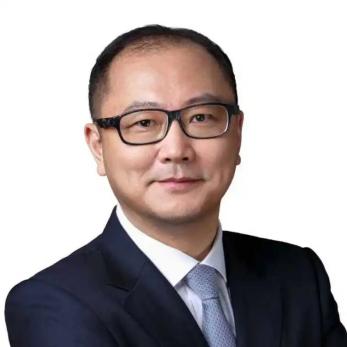
▲ Qing Wang
Chairman and Chief Economist of Chongyang Investment
Understanding of the underlying logic of China’s stock market
First, Qing Wang gave a review of the market performance: the A-share market rebounded from its September 2024 low to above 4,000 points. From a cross-sectional perspective, major global stock markets generally rose in 2025. However, from 2021 through August 2024, China’s stock market had underperformed relative to other major global markets. Behind this divergence, domestic factors were the decisive drivers.
China’s economy is currently undergoing a cyclical adjustment in its real estate market, but the risk transmission pathway differs from that of the United States and Japan in the past. The U.S. subprime mortgage crisis directly triggered a financial crisis, while Japan’s bubble burst left behind many zombie companies and financial institutions. In China, the pressure falls primarily on local governments. Their relatively high reliance on real estate-related revenues has constituted a critical link that needs to be unblocked in the economic cycle. Learning from past experiences, both the U.S. financial institution bailout in 2008 and Japan’s “Abenomics” three arrows in 2012 had significant effects on subsequent market trajectories. Since September 2024, a series of policy measures—particularly the central government’s efforts to help resolve local debt—have helped unblock relevant links, leading to improved market expectations and valuation recovery.

Several observations on a comparison between China and Japan
On the question of market concern “whether China will follow Japan’s path of long-term adjustment”, Qing Wang offered observations from several dimensions:
First, innovation capacity. After Japan’s bubble burst, its participation in subsequent global industrial transformations—such as the internet, mobile internet, and semiconductors—was relatively limited. In contrast, China’s sustained investment in technology and its innovation outcomes have already formed a relatively complete industrial system.
Second, the industrial system. Japan’s economic adjustment period coincided with the era when China was taking over the global industrial shift. In the current global landscape, China possesses a complete industrial chain and a vast domestic market—constituting a unique foundation for its economic development.
Third, market valuation. At the peak of Japan’s bubble, price-to-earnings ratios were extremely high. By comparison, when the A-share market peaked in 2021, valuations were relatively moderate and even fell further to historically low levels by the low point in 2024. Different valuation starting points naturally lead to different market trajectories.

The three stages of value revaluation and changes in market conditions
Wang pointed out that the current market cycle has exhibited a phased pattern of value revaluation. In the first phase, before the end of September 2024, high-dividend assets were the first to attract attention. In the second phase, after policy measures were implemented, growth-oriented sectors became more active, with technology and advanced manufacturing leading the way. Looking ahead, a third phase is expected to emerge, during which certain undervalued sectors may see revaluation opportunities.
This process unfolds against a macro backdrop of “asset scarcity”. With the real estate market entering an adjustment phase, high-yield property-linked investment products are withdrawing from the market, altering the opportunity cost of equity investment. In the past A-share market operation, real estate and related wealth products diverted capital flows, leading to periodic inflows and outflows of market liquidity. In the current environment, the fundamental conditions underpinning market performance are undergoing a notable shift.
International market experience suggests that market operation in different phases has different dynamics. During the rising phase from September 2024 to the end of 2025, valuation expansion played a prominent role. Looking ahead, the market is expected to gradually transition into a more stable development phase driven by corporate earnings.

Investment strategy: balanced allocation and risk-return considerations
Based on the analysis above, Qing Wang proposed a “balanced allocation” approach for investment in 2026. On one hand, the tech-growth theme—representing the direction of economic transformation and upgrading—remains worthy of sustained attention, including areas such as technological innovation and advanced manufacturing. On the other hand, some traditional sectors that have undergone significant adjustments and are trading at relatively low valuations—such as consumption and real estate-related industries—offer appealing risk-return profiles. By early 2026, market hotspots have already begun to show signs of broadening.
From the perspective of the external environment, the global economy is going through profound adjustments. Major economies are moving in different monetary policy directions, while the renminbi exchange rate has remained broadly stable at a reasonable and balanced level, providing a relatively stable external environment for China’s domestic financial markets.
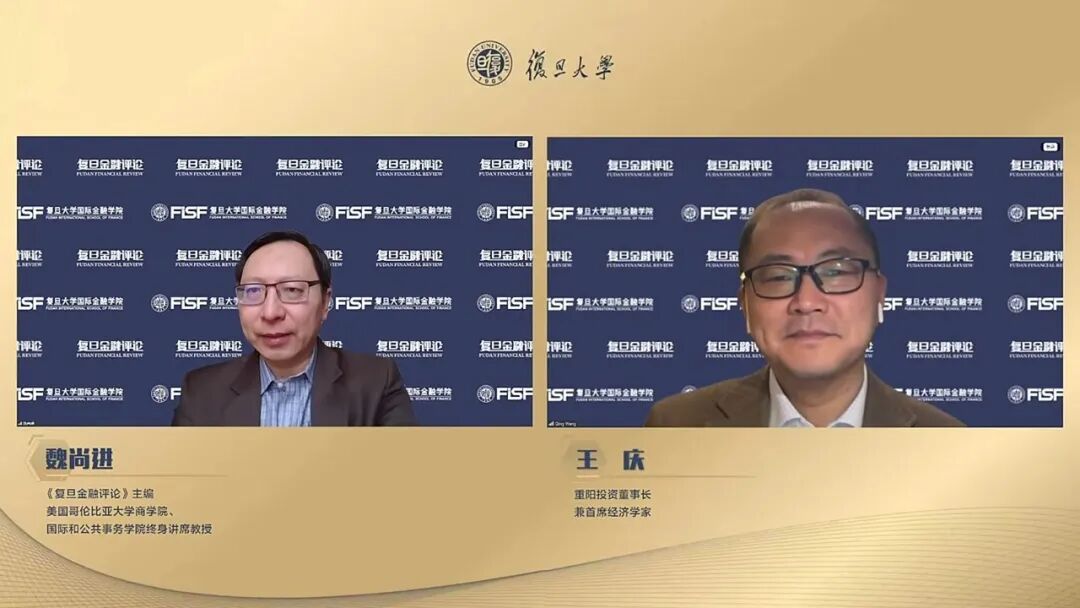
Shang-Jin Wei
Editor-in-Chief of Fudan Financial Review
Tenured Chair Professor at the School of Business and School of International and Public Affairs, Columbia University
Qing Wang
Chairman and Chief Economist of Chongyang Investment
At the dialogue session, Shang-Jin Wei and Qing Wang had discussions on multiple issues.
Regarding policy under deflationary pressure, Qing Wang noted that monetary policy must strike a balance among multiple objectives. For one thing, lowering funding costs helps address deflationary pressure; for another, attention must also be paid to the sound operation of financial institutions and the real interests of broader segments of society. International experience suggests that prolonged ultra-accommodative policies may bring about exchange rate movements and income distribution effects—all of which require comprehensive assessment.
On the outlook for the real estate market, Wang stated that the current adjustment in China’s property market has been relatively fast-paced, which, unlike Japan’s prolonged, slow decline, more closely resembles the patterns seen in the U.S. and Spain. After several years of adjustment, the market is gradually bottoming out, creating conditions for more stable development ahead.
When it came to investment opportunities in artificial intelligence, he mentioned that hardware segments—such as computing power and data centers—are currently benefiting more directly. On the application side, while the habit of paying for consumer-facing (C-end) services in China is still developing, business-facing (B-end) verticals are expected to see breakthroughs sooner. Investors can keep track of platforms in this space through channels such as the Stock Connect program. It is worth noting that, despite huge spending by global tech giants in AI, it remains uncertain who will ultimately prevail. Therefore, Investors should maintain a rational approach.

In terms of enhancing the value of traditional enterprises, Wang believed that growth opportunities in mature industries are relatively limited, but the competitive landscape in these sectors has become much clearer after years of development. For such enterprises, the key to improving investment value lies in sound operations and reasonable returns to shareholders—attracting long-term capital through consistent dividends and good corporate governance.
For ordinary investors, Qing Wang suggested non-professional investors maintain a long-term perspective and choose index-based tools. Since market timing requires strong professional judgment and market experience, retail investors who are easily affected by emotions often end up being counterproductive.
As for policy expectations, he expressed that generally the market pays close attention to the economic growth target coming out of the Two Sessions, as this will influence subsequent policy intensity and market expectations. In the aspect of industrial policy, support for new quality productive forces is already clear. He added that promoting the stable and healthy development of the real estate market would play a positive role in stabilizing the broader economy.

At the conclusion of the course, Shang-Jin Wei remarked that Qing Wang had provided the audience with valuable perspectives for understanding current market dynamics through systematic analysis and international comparisons. He thanked Wang for his insights and encouraged the audience to stay tuned for future sessions of Fudan Financial Public Course.
Fudan Financial Public Course
A high-end, free online course on finance and economics was launched by Fudan International School of Finance in 2020. Focusing on cutting-edge issues in finance and economy, the course features distinguished guest speakers from both at home and abroad to offer insightful discussions on global transformations and a systematic diagnosis of China’s development trajectory. Designed to break down the traditional barriers of higher education, it explores an inclusive path for elite financial education, allowing more people to access financial knowledge and appreciate its true value.
For more details, follow our official WeChat public account and video channel: “Fudan International School of Finance”. Subscribe to our WeChat mini-program “Online Financial Education of Fudan University” to unlock more exciting courses.

Scan the QR code to watch videos and live broadcasts

Scan the QR code to subscribe to Online Financial Education of Fudan University





 86-21-63895588
 Handan Campus: Building B, No.579 Guoquan Road, Yangpu District, Shanghai 200010