Professor Jun Qian Decodes Several Opinions on Deepening the Building of Shanghai as a Global Asset Management Center — Deepening the Building of Shanghai as a Global Asset Management Center: from Scale Expansion to Function Leadership | Insight FISF MARC
Release time:2026-06-08
n June 2nd 2026, the General Office of Shanghai Municipal People’s Government issued Several Opinions on Deepening the Building of Shanghai as a Global Asset Management Center (hereinafter referred to as the Several Opinions). The document puts forward 21 measures in five areas: strengthening financial market development, building a high-quality asset management institution system, enriching products and services, advancing high-level opening-up, and cultivating a sound ecosystem. It sets a goal of achieving an asset management scale of 55 trillion yuan in Shanghai by 2030, accounting for one-third of the national total. In response, Jun Qian, Executive Dean and Professor in Finance at Fudan International School of Finance, offered his interpretation.
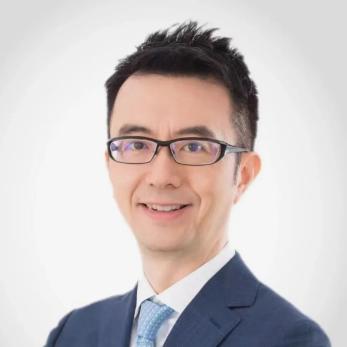
Jun Qian
Executive Dean of FISF
Professor in Finance
This policy is formulated to serve the fundamental task of enhancing Shanghai’s global allocation and risk management functions for RMB assets and building a global asset management center under the “15th Five-Year Plan”. It closely follows the high-quality development orientation of shifting from scale expansion to functional upgrading, connotation deepening, and efficiency improvement, and highlights four major features: basic product innovation, cultivation of first-class institutions, global resource allocation, and inclusive value creation.
At the level of basic product innovation, the policy leverages the endowments of a full-category factor market to scale up the supply of sci-tech innovation bonds, cross-border offshore bonds, various REITs, and real estate trusts. It also makes forward-looking arrangements for emerging commodity futures and equity options tools such as computing power, electricity and LNG, while simultaneously improving the sequence of distinctive products including green asset management, carbon asset securitization and transition finance.

At the level of cultivation of first-class institutions, differentiated and categorized cultivation is employed to guide public funds, wealth management and insurance asset management toward specialized paths, while private equity focuses on full-cycle equity investment in sci-tech innovation. Meanwhile, access qualifications for foreign asset management businesses are loosened, continuously attracting overseas sovereign funds, multinational asset management headquarters, and supporting professional intermediaries.
At the level of global resource allocation, the policy opens up two-way channels for the domestic and international allocation of RMB assets, enhances the global pricing power of commodities and fixed-income assets, coordinates capital circulation between the onshore and offshore markets, and strengthens Shanghai’s function as a global hub for RMB asset allocation and risk management.
Regarding inclusive value creation, the policy promotes the transformation of wealth management from product distribution to buyer-side advisory services, optimizes wealth allocation services for the general public via fintech, improves the product supply involving pension wealth management, family trusts, and charitable trusts, and guides long-term capital such as insurance and annuities into the real economy, thereby realizing the inclusive, foundational value of the asset management industry.

Jun Qian further noted that this policy will drive the transformation of Shanghai International Financial Center from scale agglomeration to functional leadership, achieving a leap in capacity. First, it will accelerate the agglomeration of high-end global asset management factors, improve the full-chain asset management industry ecosystem, and strengthen Shanghai’s core hub advantage in the Asia-Pacific asset management market. Second, through diversified asset management products and cross-border trading mechanism innovation, it will activate the cross-border pricing functions of underlying assets such as sci-tech innovation assets, commodities and real estate, continuously amplifying the global reach of “Shanghai Prices”. Third, it will build a long-term mechanism for medium- and long-term capital to empower sci-tech innovation, open up the full-lifecycle investment and financing chain for technology enterprises, and achieve deep coupling between financial resource allocation and the cultivation of a modern industrial system and new quality productive forces. Fourth, it will enrich the global allocation scenarios for RMB assets, improve the soft environment for foreign-related financial business, and continuously optimize Shanghai’s hub position in the global financial network.

Additionally, Jun Qian believed that this policy has significantly enhanced the convenience and accessibility for Shanghai investors to allocate global assets. With the optimization of QDII and QDLP mechanisms, coupled with the expansion of Shanghai-Hong Kong Stock Connect and Bond Connect, mutual recognition of cross-border ETFs, and the implementation of Hong Kong mutual recognition funds, Shanghai investors can indirectly gain exposure to global equities, overseas fixed income, overseas real estate, commodities, and other categories through public funds, wealth management, and asset management products, enriching the range of overseas targets and market access channels. The expansion of interconnected targets to include REITs has further substantially lowered the threshold for Shanghai investors to allocate global real estate assets.





 86-21-63895588
 Handan Campus: Building B, No.579 Guoquan Road, Yangpu District, Shanghai 200010