Professor Jun Qian Accepts an Interview of Shanghai Securities News, Offering Policy Advice on New Paths for Sci-Tech Achievement Transformation | “Two Sessions” FISF Voices
Release time:2026-02-11
“Two Sessions” FISF Voices
On the morning of February 2nd 2026, the Fourth Session of the 14th Shanghai Municipal Committee of the Chinese People's Political Consultative Conference (CPPCC) opened at the Expo Center. On the morning of February 3rd, the Fourth Session of the 16th Shanghai Municipal People’s Congress was also held at the Expo Center.
Drawing on their industry observations, social research, and public input, the delegates have formulated this year’s policy proposals across a wide range of fields—from financial technology innovation, cultural tourism and consumption, and urban renewal, to education and employment, as well as elderly care and childcare services.
From the perspective of industry insiders, three stages are typically involved in the process of transforming sci-tech innovations from the “laboratory” to the “industrial chain”: “from 0 to 1”, “from 1 to 10” and “from 10 to 100”. Among these, accelerating the pace and intensity of the “from 0 to 1” stage has become a key focus of attention for many delegates and political advisors. During the “Two Sessions”, Jun Qian, Member of the Shanghai Municipal Political Consultative Conference, Executive Dean of FISF and Professor in Finance, accepted an interview of Shanghai Securities News, offering policy advice on new paths for sci-tech achievement transformation.
“Two Sessions” FISF Voices
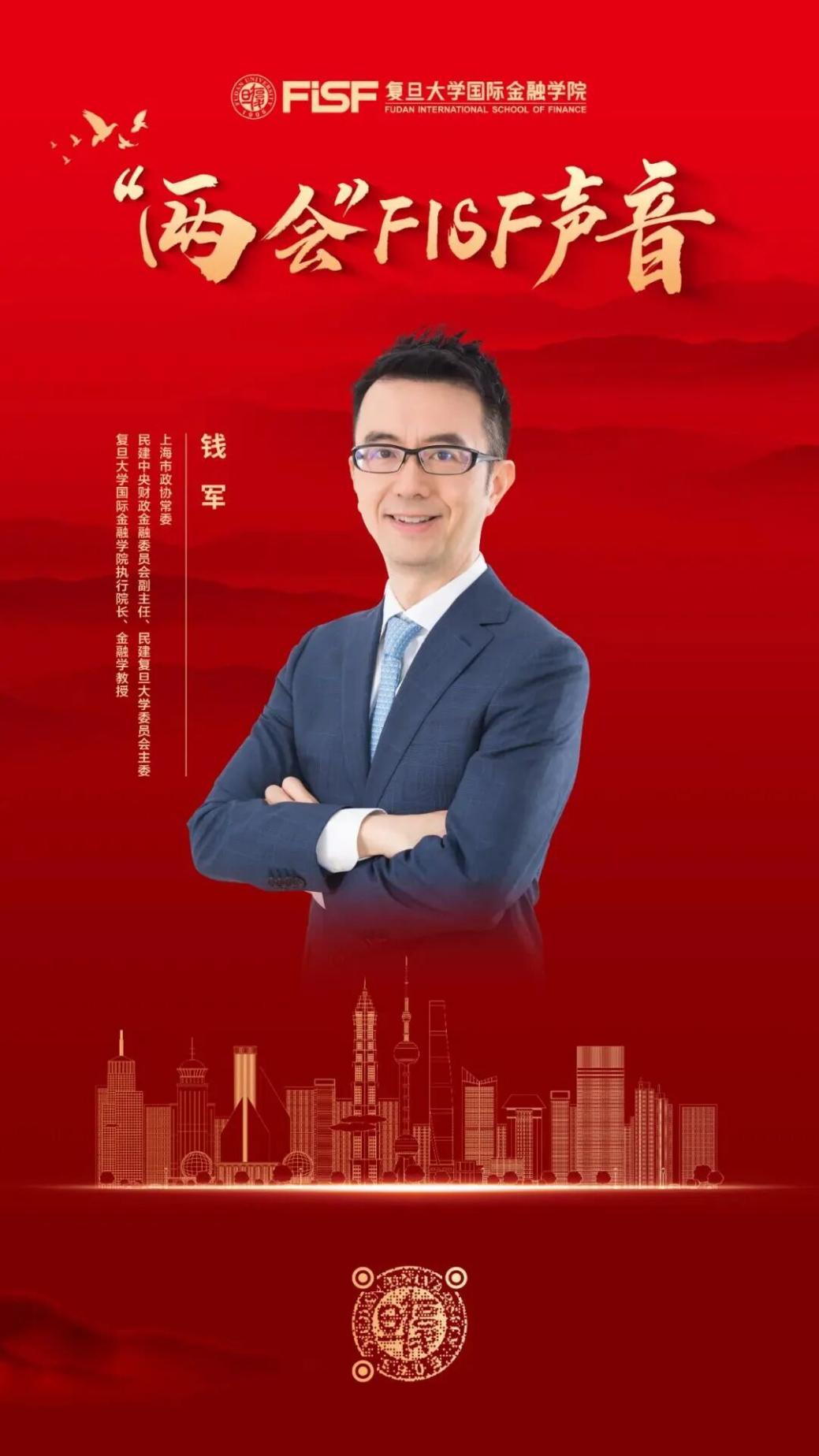
Jun Qian
Member of the Shanghai Municipal Political Consultative Conference
Vice Chairman of the Central Financial and Economic Affairs Committee of the CNDCA, Chairman of the Fudan University Committee of the CNDCA
Executive Dean of FISF and Professor in Finance
Universities and research institutions have always been a vital force in driving sci-tech achievement transformation and commercialization. Take ShanghaiTech University as an example: by the end of 2025, the university had filed a total of 2,395 patent applications, including 633 PCT and foreign/regional patent applications, ranking first among the top 100 innovative universities in the Yangtze River Delta region in terms of patent internationalization. Meanwhile, it has been among the top universities nationwide in patent licensing for six consecutive years, and has incubated a total of 67 companies, securing over RMB 2.2 billion in early-stage venture financing.
“After six years of dedicated efforts, the Office of Technology Transfer has become an indispensable force within the innovation system of ShanghaiTech University.” Zhi Liu, Deputy to the Shanghai Municipal People’s Congress and Vice President of ShanghaiTech University, told Shanghai Securities News. He further noted that the acceleration of sci-tech achievement transformation based on the university’s practical output requires full recognition that universities, as a key source of innovation, are still at a relatively early stage in research output. To this end, he recommended that Shanghai provide coordinated guidance in areas including policy mechanisms, financial support, platform building, and talent incentives.
“For instance, Shanghai can expand inclusiveness through patient government capital, promote precise matching and alignment between disciplines with low technology transfer rates and industrial application scenarios through platform development, and encourage greater market vitality through corporate mergers and acquisitions. By doing so, a self-sustaining achievement transformation ecosystem can be built, pushing more laboratory technologies toward practical application.” Liu said.
“If universities and research institutions are the backbone of technological innovation “from 0 to 1”, then technology-based enterprises are the main force driving industrial innovation “from 1 to 10”. Deeper integration of technological and industrial innovation in Shanghai demands further intensification of industry-university-research collaboration between universities, research institutions and tech companies and full utilization of the source function of technological innovation.” Xinhua Ji, Deputy to the Shanghai Municipal People’s Congress and Chairman and CEO of UCloud, told Shanghai Securities News. He advised that Shanghai should make greater efforts to encourage universities and research institutions and a great many small- and medium-sized tech companies to engage in collaborative industry-university-research innovation.
Ji stated that small- and medium-sized tech companies, affected by their industry positions, capital scales and other relevant factors, struggle to collaborate with universities and research institutions and thus fail to get their innovation potentials fully released. According to him, it is necessary for government departments to play a more active guiding role in helping to build cooperation platforms and establish contact channels. For example, a portion of state research funding allocated to universities and research institutions could be designated as targeted support for “SME collaborative innovation,” specifically used to back R&D projects that involve partnerships with small- and medium-sized enterprises. He also suggested optimizing the mechanisms for allocating research funding and establishing a non-conventional review process for major original and disruptive innovation projects that allows for breakthroughs through trial and error, thereby fostering an open and inclusive sci-tech innovation ecosystem.

In his interview with Shanghai Securities News, Jun Qian said, “In transforming sci-tech achievements ‘from 0 to 1’, professional evaluation can raise the efficiency of investment and financing. I recommend Shanghai establish more specialized platforms and institutions, reinforce talent cultivation, and build an effective bridge for the commercialization and industrialization of original sci-tech innovations. If this is done well, more sci-tech innovations will accelerate their journey out of the laboratory, and more vibrant startups will emerge, forming a vital source of fresh momentum for the capital market.
He also proposed improving the multi-tiered capital market system to enhance direct financing support for sci-tech innovation enterprises. He called for greater inclusiveness of the capital market, leveraging the resource advantages of tech companies in the Yangtze River Delta region, with a focus on supporting sci-tech enterprises that have outstanding core technologies and high growth potential but have yet to turn a profit—such as through a proposed “Sci-Tech Innovation Growth Layer”—in their efforts to access the capital market.
Content source: Shanghai Securities News





 86-21-63895588
 Handan Campus: Building B, No.579 Guoquan Road, Yangpu District, Shanghai 200010